
 МИ ПРАЦЮЄМО ДЛЯ УКРАЇНИ
Table of contents
- Blog in an online store: a tool to increase traffic and search engine trust
- The impact of content on technical SEO and site indexing
- Behavioral factors: retention and interaction
- Building backlinks and brand authority
- The psychology of intent: how to find new customers
- The free content trap: hidden risks
- Social media and multi-channel strategy
- Why you should hire a digital marketing agency
- Frequently asked questions (FAQ)
- Conclusion
Blog in an online store: a tool to increase traffic and search engine trust
Launching online sales usually begins with filling the catalog. However, product pages only cover established demand. Most buyers search for information long before a transaction. What is a blog and why does a commercial resource need it? It is a platform for expanding semantics and working with the client at the selection stage. Each article becomes an asset that brings in visitors without constant costs per click.
The impact of content on technical SEO and site indexing
Search engine bots prefer resources that regularly add new materials. Research by TechClient confirms: sites with active blogs have 434% more indexed pages. This means Google visits the website more often, notices changes faster, and evaluates the project’s relevance more highly.
A blog on the site solves the problem of a limited semantic core. Product pages mainly contain commercial queries. Articles allow the use of informational phrases, which account for 70% of web searches.
| Performance indicator | Site without a blog | Site with a blog |
| Number of indexed pages | Limited to catalog | 434% higher |
| Type of attracted traffic | Only “hot” | Full spectrum of demand |
| Index update speed | Low | High (regular signals) |
| Internal linking | Only hierarchical | Extensive (thematic) |
Behavioral factors: retention and interaction
Algorithms evaluate resource quality based on visitor actions. Maintaining a blog directly impacts key metrics:
- Dwell time. A useful article keeps a person on the page for 2–5 minutes. For a search engine, this is a signal of content value.
- Depth of view. Through internal links, readers move to categories or products. This reduces bounce rates and raises domain rating.
- Repeat visits. High-quality advice brings people back to the website. A loyal audience is a sign of brand authority.
Regularly publishing interesting materials stimulates feedback. Comments under articles create unique user-generated content. This strengthens search engine trust, as it indicates “live” interaction with the audience.
Building backlinks and brand authority
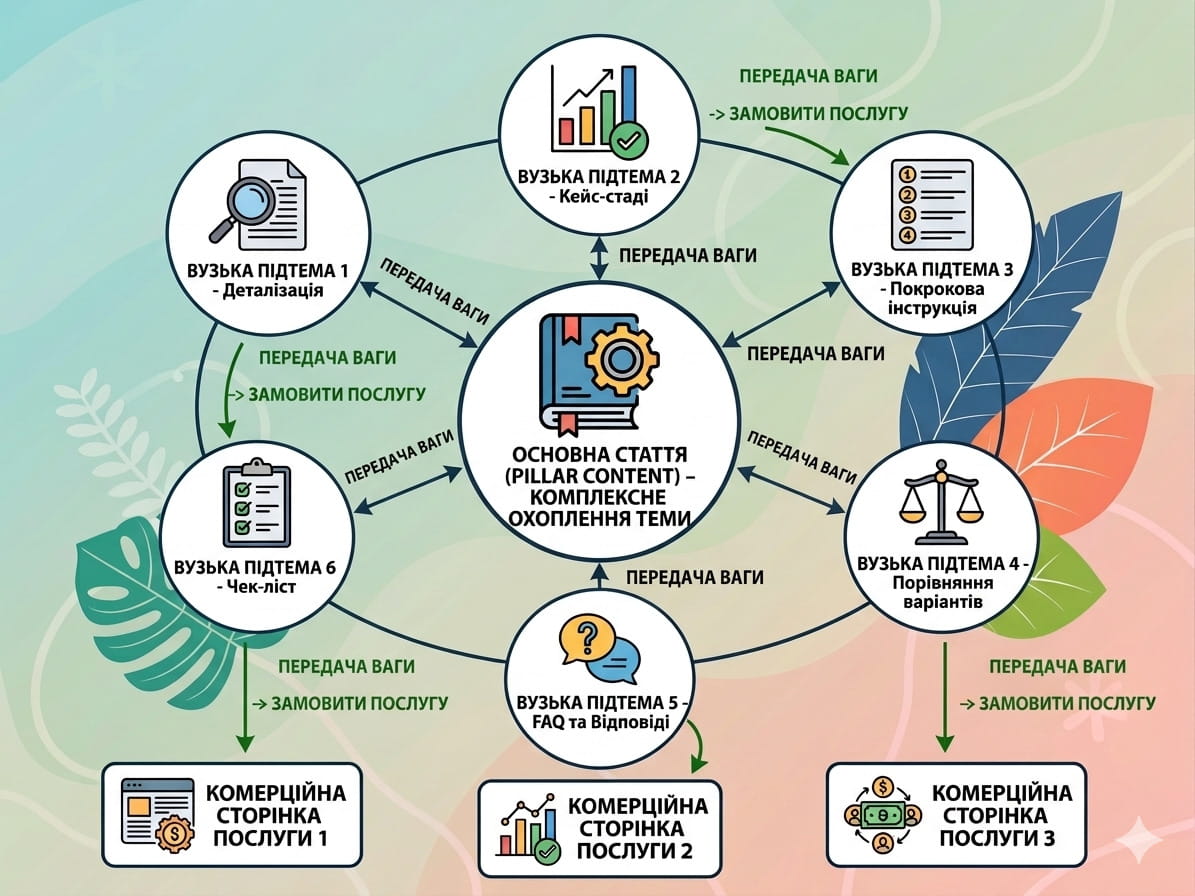
Links remain the foundation of ranking. However, third-party resources rarely link to a “Buy a kettle” page. Blogs attract natural backlinks. Journalists, bloggers, and forums share guides, research results, and expert opinions.
High-quality content support for an online store allows for free mentions. This builds “authority” within the E-E-A-T framework (Experience, Expertise, Authoritativeness, Trustworthiness). The more links leading to informational materials, the higher the weight of the entire domain. This helps product positions compete with large marketplaces.
“Good content isn’t about trying to sell immediately. It’s about creating value, positioning the company as a reliable source of information” — Ann Handley, content marketing expert and Chief Content Officer at MarketingProfs.

The psychology of intent: how to find new customers
The user goes through a journey from realizing a problem to making a purchase. If an online store only appears at the final stage, the cost of acquisition will be maximized. A blog allows you to intercept the client earlier.
Consider an example. A person searches for “how to choose running shoes.” An article with a detailed analysis of technologies removes the barrier of uncertainty. A call to action (CTA) with a link to the relevant section is placed inside the text. Such a transition is perceived not as an advertisement, but as a logical continuation of help. This is the path to building brand awareness through expertise.
Why does a company need a blog if context advertising is already running? Ads give results as long as there is money. Content works on the principle of compound interest. An article written in 2026 can bring in buyers in 2028 without additional investment.
The free content trap: hidden risks
Often, owners try to save money by delegating text writing to in-house staff. This is a flawed strategy. Content creation should be handled by specialists. Low-quality materials without structure or keyword analysis do not bring traffic. Moreover, they damage your reputation.
The “free” method of blogging has a price:
- Lost time. Employees are distracted from their primary duties.
- Poor behavioral factors. “Textual noise” causes visitors to immediately close the site.
- Search engine sanctions. Non-unique or AI-generated texts without editing lower the rating of the entire resource.
A professional content plan is not just a list of topics. It is a strategy based on competitor analysis, semantic design, and an understanding of the sales funnel.
“Marketing is no longer about the stuff that you make, but about the stories you tell” — Seth Godin, best-selling marketing author.

Social media and multi-channel strategy
A blog becomes a source of “raw material” for SMM and email newsletters. One article can easily be transformed into a series of posts for Instagram or Facebook. This ensures consistency in communication and increases loyalty. People willingly share useful materials, providing additional free reach.
An effective tip is to use content for customer support. Instead of long explanations over the phone, a manager can send a link to an instruction article. This saves sales department resources and demonstrates a high level of service.
“Organizations that can’t create quality content lose to those who learn the basics of SEO” — Rand Fishkin, founder of Moz.
Why you should involve the digital marketing agency Outsourcing Team
Self-managing a blog usually ends after the third article. Consistency is the main factor of success. The specialists at digital marketing agency Outsourcing Team provide a full cycle of work:
- Conducting a deep analysis of the niche and search queries.
- Creating texts that meet E-E-A-T requirements.
- Technical optimization of each publication for fast indexing.
- Setting up analytics to track real conversions.
By entrusting writing and promotion to professionals, a business gets a stable source of new customers. This allows the owner to focus on scaling while the content section builds authority.
Frequently asked questions (FAQ)
1. Does anyone read blogs in 2026?
Yes, 77% of users regularly consume informational articles to make decisions.
2. How often should articles be published?
Consistency is more important than quantity. Ideally, 2-4 deep materials per month.
3. Does a blog help a local store?
Absolutely. Articles about niche trends in your region improve visibility on maps and in local search.
4. Will I be able to earn more?
Yes. Businesses with a blog experience 13x higher conversion rates.
5. Will more visitors come to the site?
Yes. Traffic grows by 55%. You get 434% more visible pages in Google.
6. Will there be new customers if I already have ads?
Yes. A blog generates 67% more leads monthly. The cost per lead via content is 62% lower than PPC.
7. How does a blog affect trust?
81% of people trust advice found in blogs. This turns your online store into an authoritative source in the eyes of the customer.
Conclusion
Understanding why a blog is needed gives a business a strategic advantage. It is an investment in the future that pays off through increased loyalty and reduced dependence on advertising budgets. In 2026, a site without an expert section is perceived as an outdated storefront. A blog makes the company feel alive and reliable. It is the path to building a community around a product, rather than just one-off transactions. Start developing your own media platform today with the specialists at Outsourcing Team to become a market leader tomorrow.



comments