МИ ПРАЦЮЄМО ДЛЯ УКРАЇНИ
 Input data
 Why does a developer need CRM and its benefits?
In the real estate development sector, the journey from initial interest to signing a contract can take months. Without a specialized tool, data on potential buyers gets lost in notebooks, requests in messengers remain unanswered, and management lacks a real picture of at which stage clients are “dropping off.” A CRM system is the foundation for building systematic sales.
Key benefits of implementation:
- Data Centralization: all website leads, calls, and inquiries from social media (Facebook, Instagram) automatically enter a single database.
- Deadline Control: the system reminds managers to call a client or schedule a meeting, minimizing the human factor.
- Pipeline Transparency: the ability to clearly see the number of leads, property viewings, and bookings.
- Marketing Analytics: tracking which advertising channel brought in a real buyer, rather than just someone “interested.”
Workflow
1. Lead Pipeline Setup
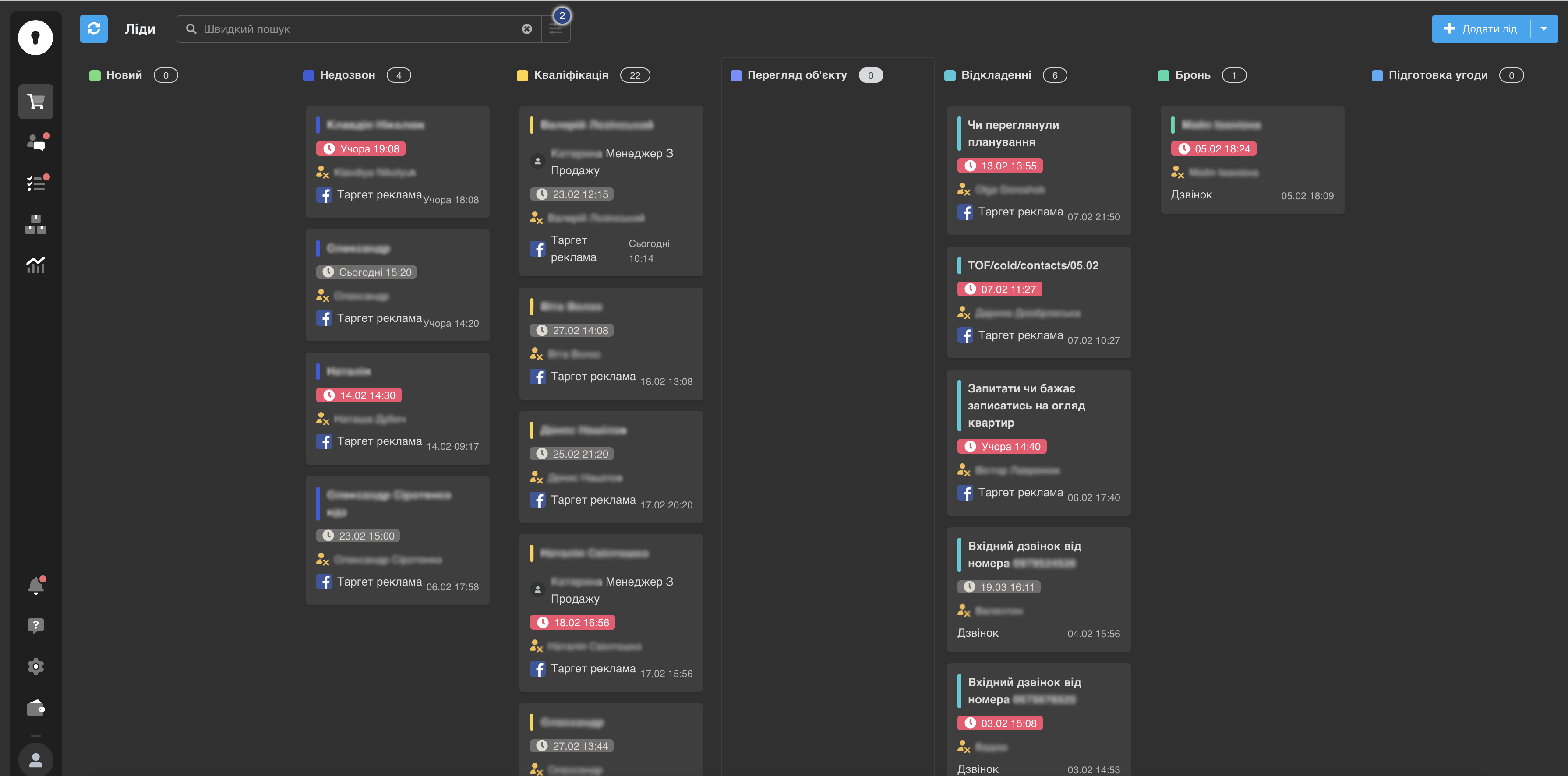
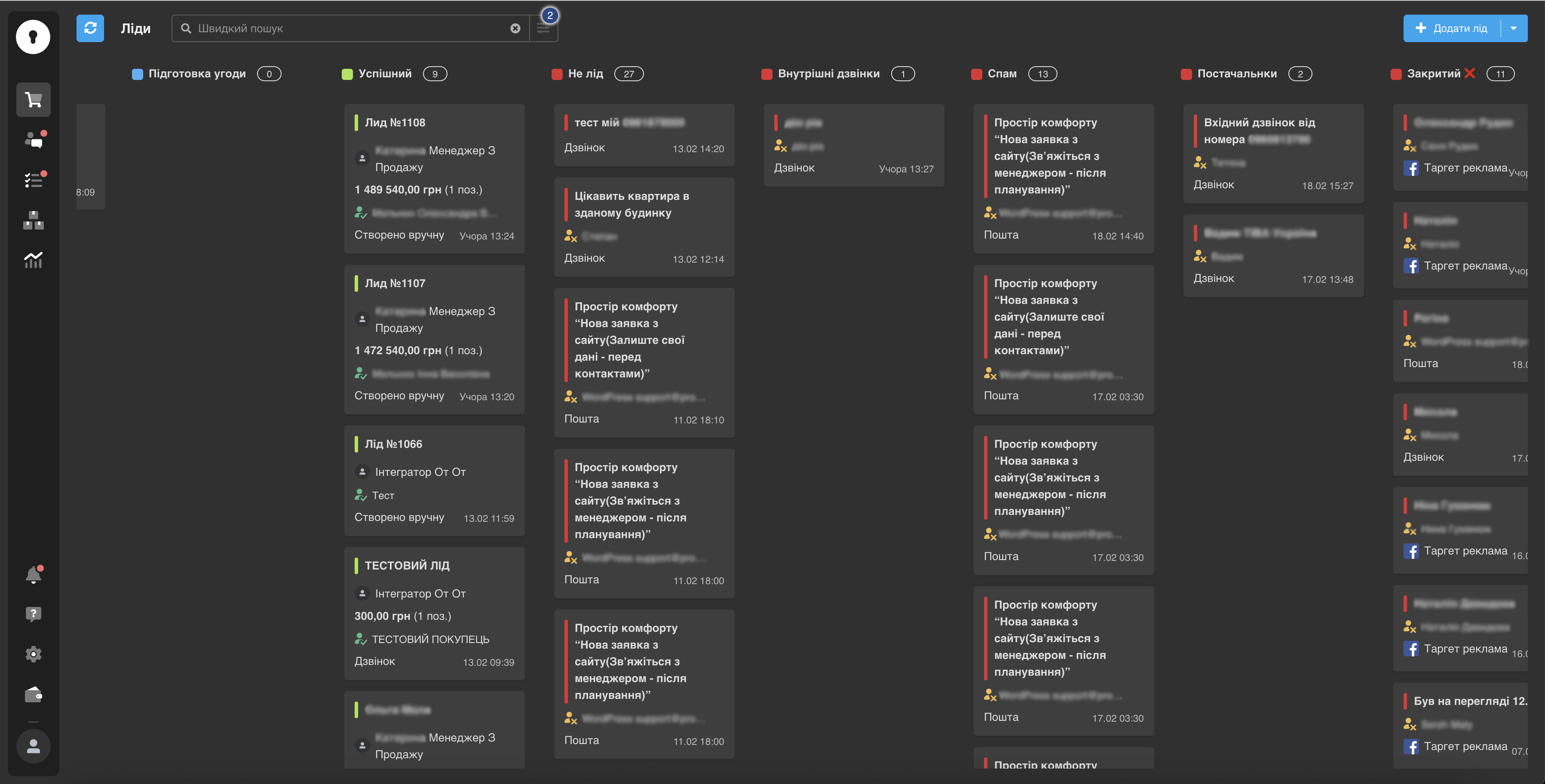
The first stage was creating a structured Kanban board that visualizes the entire client journey from first contact to a successful deal. We implemented status logic including automatic processing of new inquiries, handling of unanswered calls, qualification of client needs, and preparation for property viewings. Special attention was paid to the booking and document preparation stages, allowing managers to clearly see task priority and avoid losing buyers during the decision-making phase.
2. Order and Deal Management
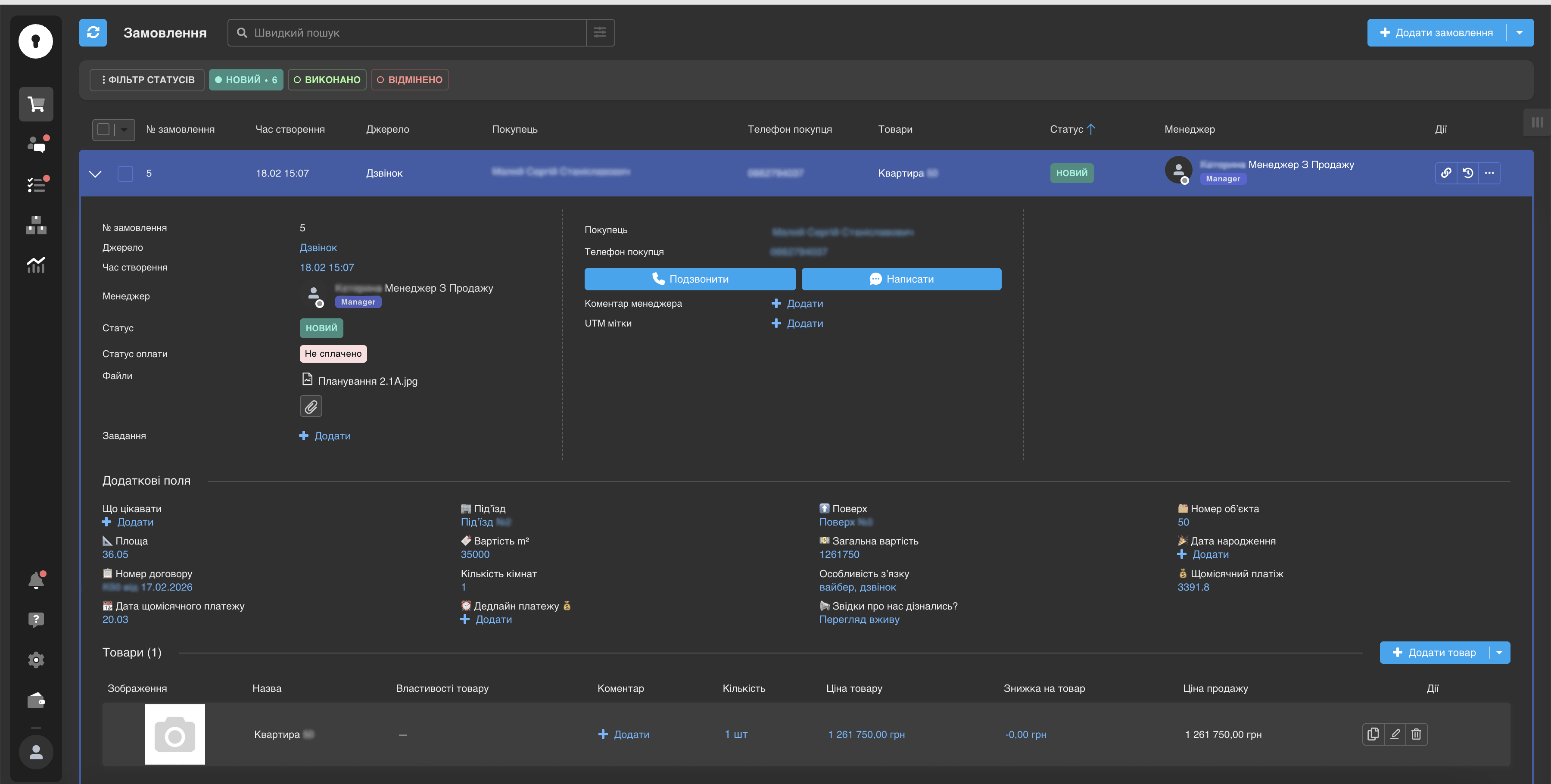
We configured the order card as a single information window where all technical and financial data is accumulated. Now, a manager can see the apartment number, its exact square footage, and current price directly in the system without checking external tables. Scan copies of contracts and floor plans are attached to each deal, and payment statuses allow for the instant identification of debts or successful transactions, significantly speeding up internal communication between departments.
3. Omnichannel and Chats
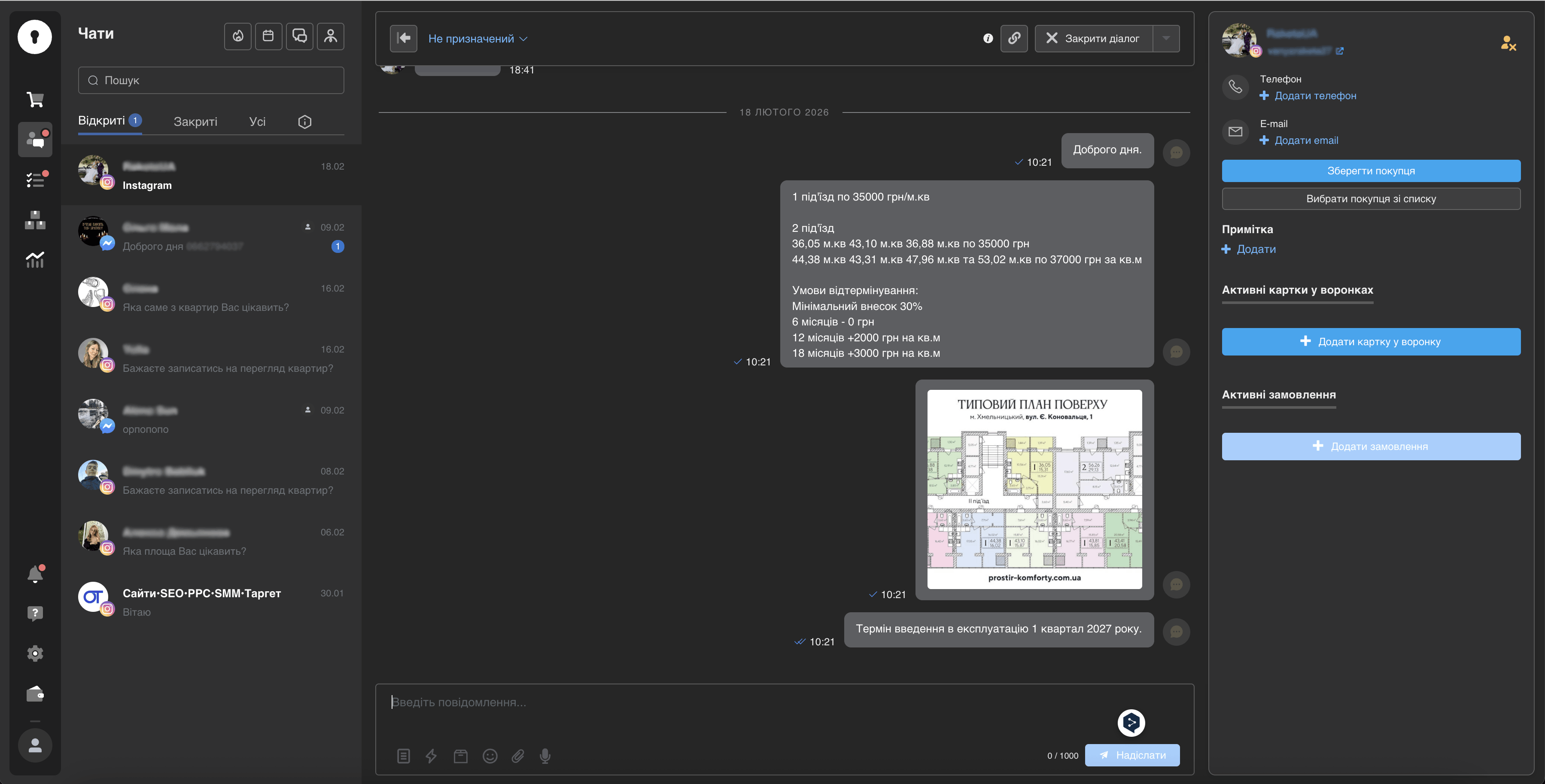
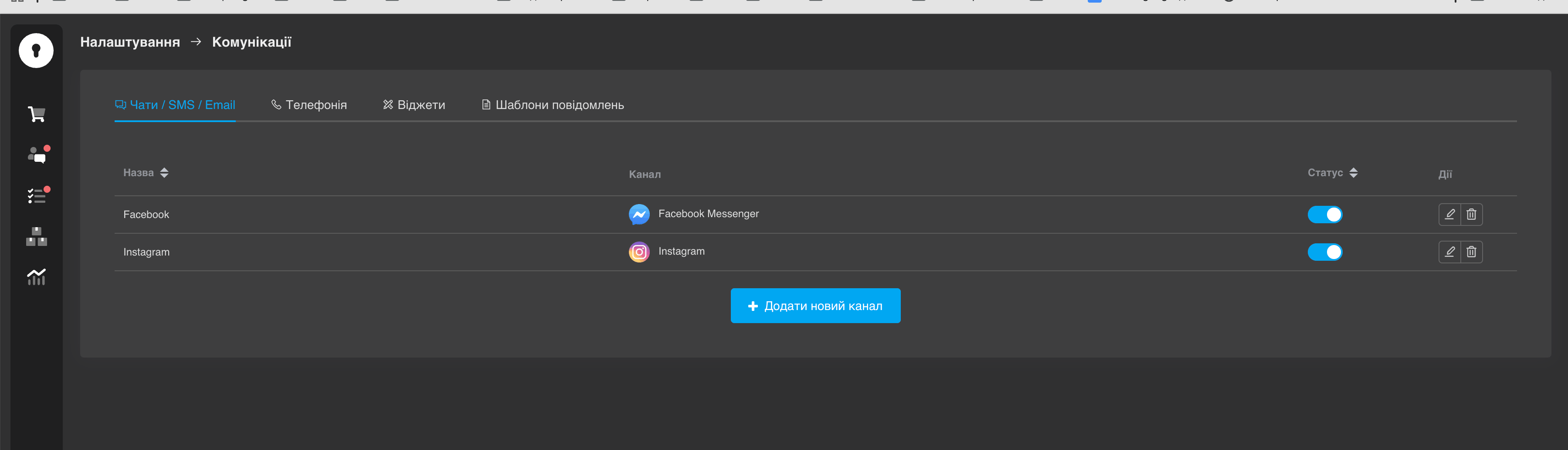
For rapid communication, we integrated Instagram and Facebook Messenger directly into the CRM interface. This enabled managers to respond to messages in a single window, see the correspondence history with each client, and use ready-made response templates. Current prices, installment terms, and typical floor plans are always at hand within the chats, allowing consultations to be provided in seconds without making the client wait for an answer.
4. Traffic Source Configuration
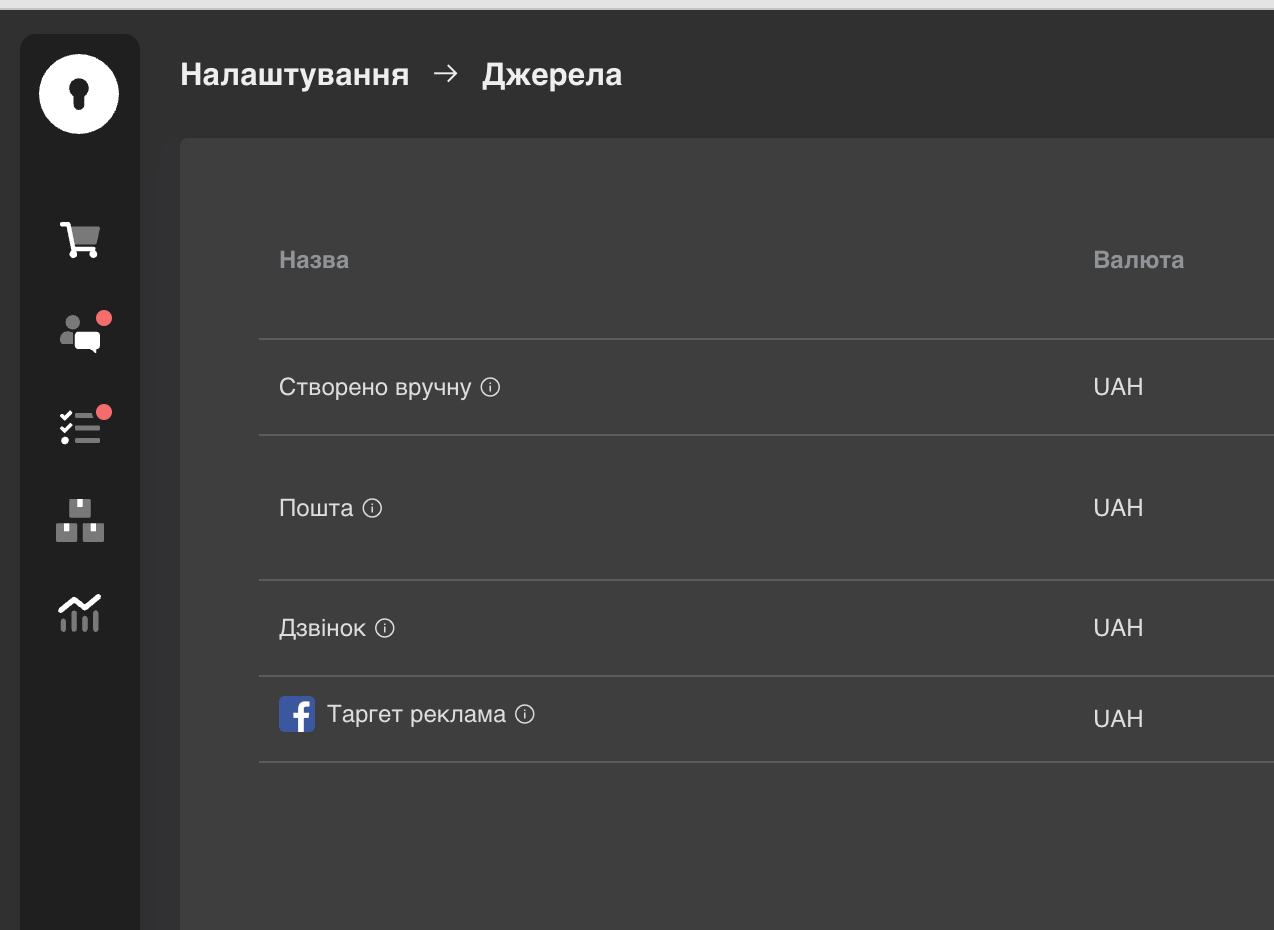
To understand marketing effectiveness, end-to-end lead identification was implemented. The system automatically tags each incoming inquiry based on whether it came from targeted advertising, an incoming call, or email. All financial indicators are linked to a single currency, allowing the developer to analyze the acquisition cost of each buyer and effectively distribute funds between different advertising channels.
5. Customization via Custom Fields
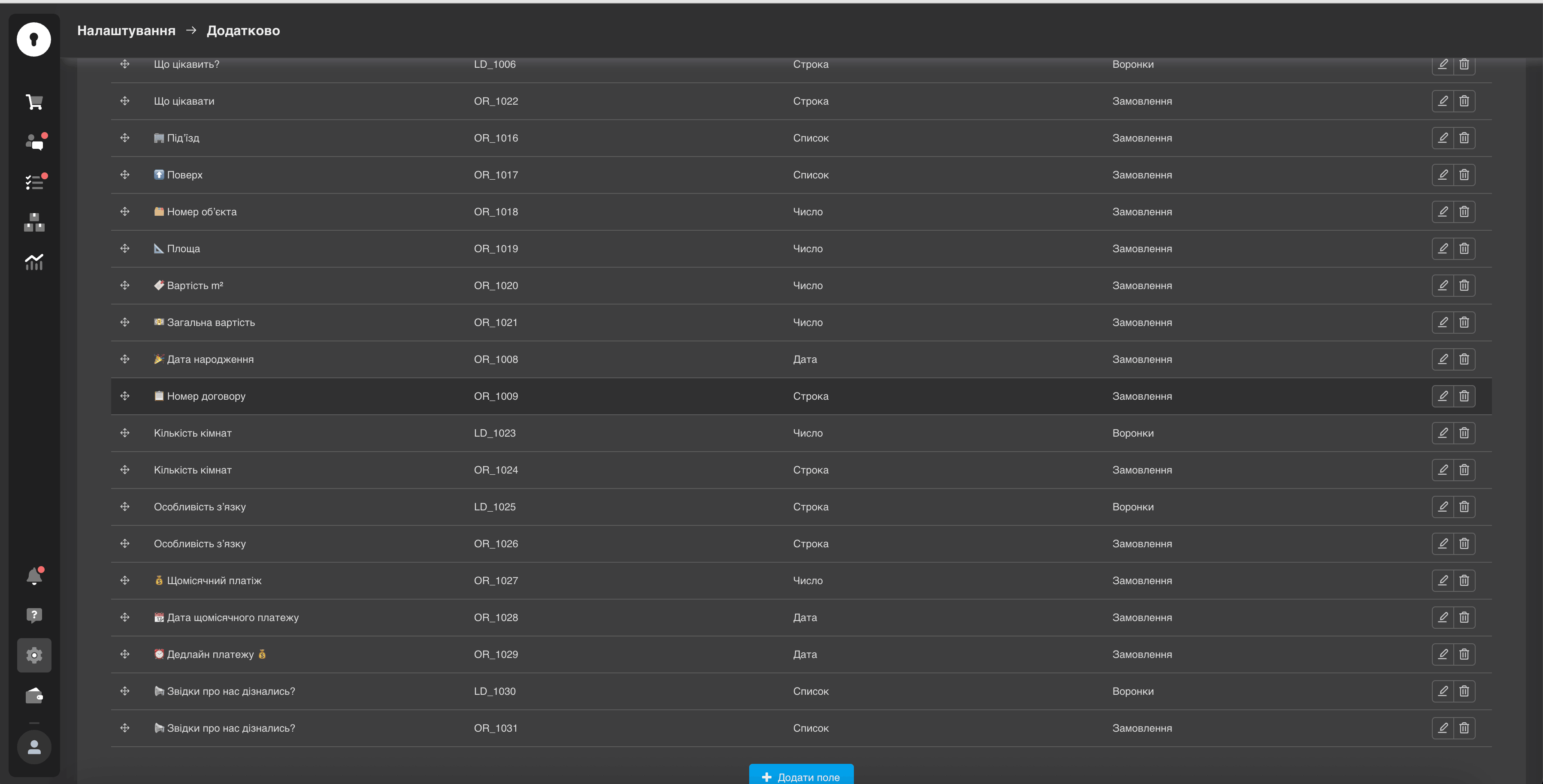
We conducted a deep adaptation of the CRM to the specifics of real estate construction by creating over fifteen unique fields. These include technical object parameters (entrance, floor, unit number), detailed price calculations per square meter, and payment schedules. A special role is played by deadline control dates, which automatically signal the manager to remind a client about an upcoming installment payment.
6. Telephony and Call History
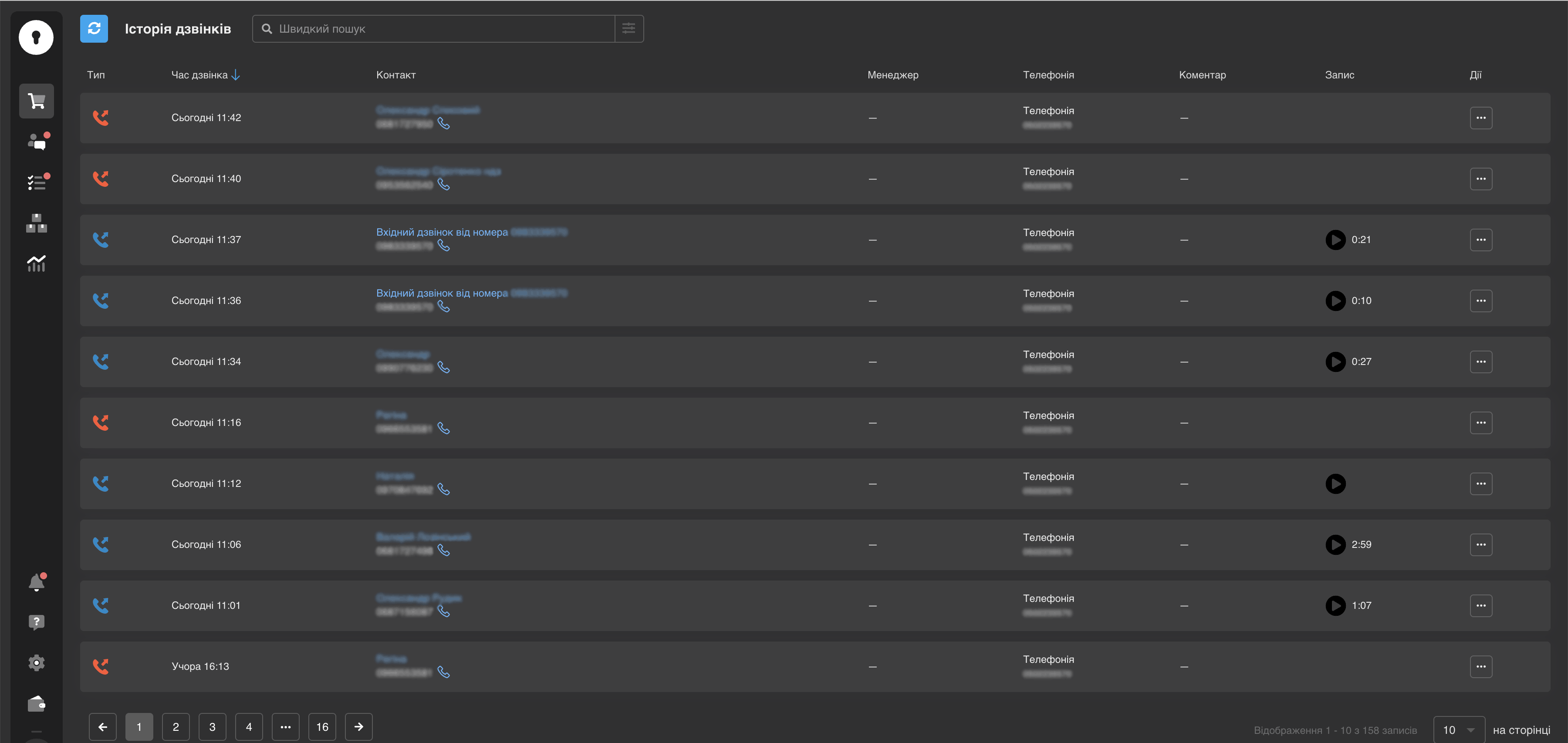
Connecting professional telephony allowed for the automated logging of all conversations and their storage directly within client cards. Every call—incoming, outgoing, or missed—is now displayed in the activity log with the ability to listen to the recording. This has become a tool for service quality control, objection handling analysis, and a guarantee that no client is left without feedback due to the human factor.
7. Centralization of Communications
The final step was the full synchronization of all communication tools into a single management center. We set up stable connections for social media and message templates, turning the CRM into a complete hub for the sales department. This integration minimized routine tasks and allowed the company to focus on high-quality engagement with potential residents of the “Prostir Komfortu” residential complex.
 Result obtained