МИ ПРАЦЮЄМО ДЛЯ УКРАЇНИ
 Input data
 Progress of work
Before we start, let’s understand what an advertising strategy is and why YOU need it.
Advertising strategy — is a detailed plan of action that determines how a company will promote its goods or services in the market to achieve specific marketing goals. It includes selecting the target audience, formulating key messages, defining advertising channels and budget, as well as methods for measuring campaign effectiveness. Essentially, it’s a roadmap that guides all advertising efforts.
Why is it needed? An advertising strategy is critically important for any business because it allows you to:
- Clearly define goals: From increasing brand awareness to growing sales or attracting new customers.
- Optimize resources: Effectively allocate budget and time, avoiding unnecessary expenses on ineffective channels or messages.
- Stand out from competitors: Thanks to in-depth market analysis and unique positioning.
- Measure success: Establish metrics to track progress and adjust campaigns as needed.
- Create a cohesive image: Ensure a unified brand perception across all advertising communications.
Without a clear advertising strategy, marketing actions can be chaotic, fail to yield desired results, and lead to significant financial losses.
Competitor Analysis
The first and key stage in developing an advertising strategy is a comprehensive market analysis and the study of current advertising practices in the real estate segment. We conducted a detailed review of the advertising activity of leading developers, focusing on their campaigns in Google Ads and Facebook, to identify effective approaches and general trends.
Analysis of Advertising Practices in Google Ads
We thoroughly researched the advertising campaigns of leading developers on the Google Ads platform. As a result of this analysis, we clearly saw that most successful market players actively use two key categories of campaigns:
- Search advertising campaigns: This allows them to attract clients who already have a formed demand and are actively looking for real estate by entering relevant queries into Google.
- Performance Max (PMax) campaigns: These automated Google campaigns provide developers with broad reach, placing ads across all Google channels – Search, Display Network, YouTube, Gmail, and Discover.
Common Creative Approaches in PMax Campaigns
Overall, it was found that most competitor campaigns actively use visually consistent static and dynamic creatives aligned with their brand style. We saw how they use videos that skillfully combine footage from different construction stages with visualizations or photos of already completed objects. Often, such videos are accompanied by professional voiceovers or include a speaker on screen, creating the effect of direct address. We also noticed the use of dynamic videos generated from high-quality photos, and videos that rely solely on visual aesthetics and musical accompaniment to create an atmosphere. In addition, many campaigns focus on detailed tours of apartment interiors, main entrances, and other key elements of the complex to visually demonstrate the advantages of the housing.
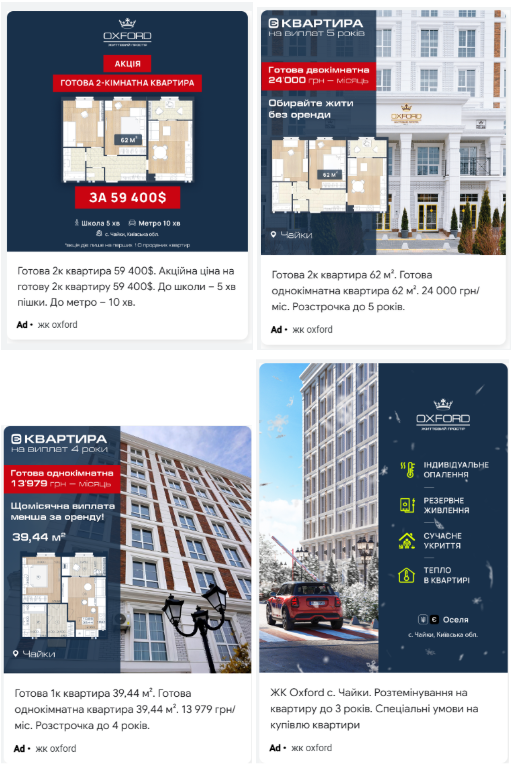
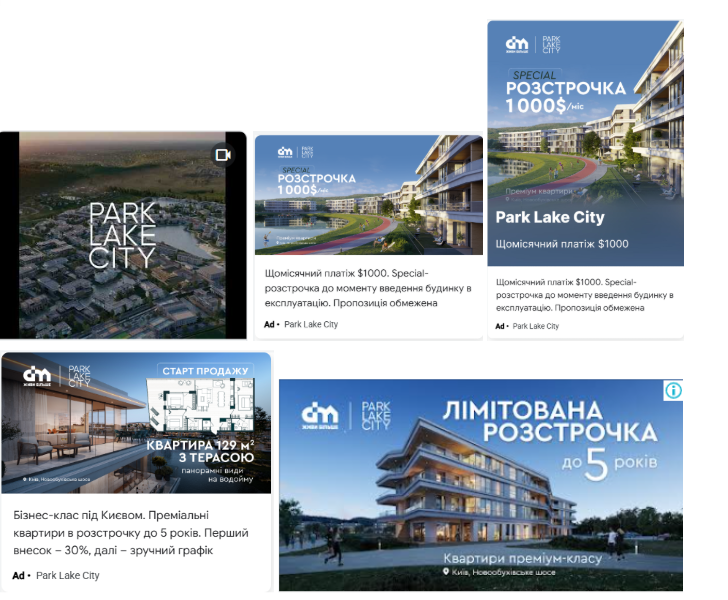
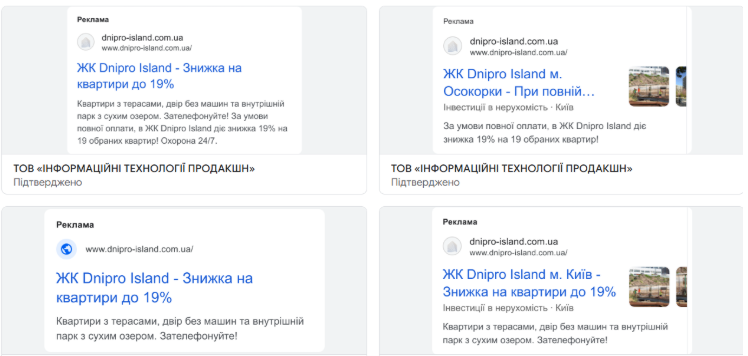
Based on these findings, we formulated the first recommendations for “Prostir Komfortu” regarding Google Ads: We suggested starting with a general search advertising campaign to cover core demand. In parallel, we recommended implementing a PMax campaign, structuring it with several asset groups. This will allow for more precise targeting of different audience segments, for example, by apartment type or price range. The initial budget will be allocated to ensure optimal effectiveness.
Analysis of Advertising Practices on Facebook
Next, we moved on to analyzing the advertising activity of developers on the Facebook social network. Here we observed significant use of both static images and various video content.
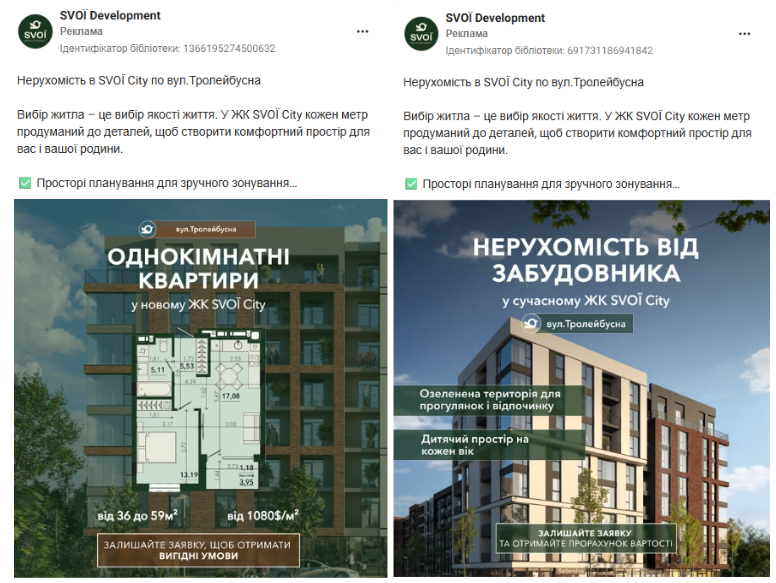
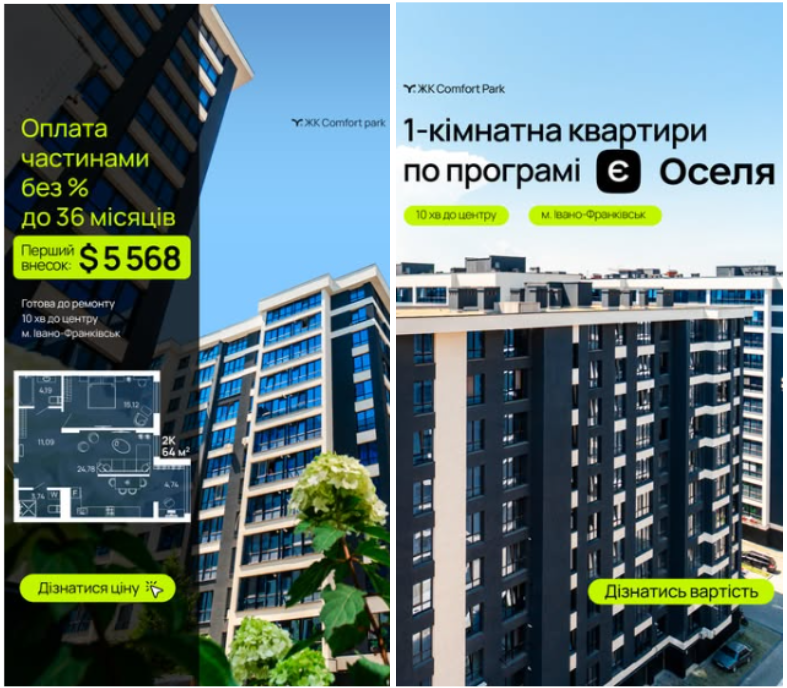
Key trends in advertising materials and strategies:
- Video Dominance: Video materials are often a key element of campaigns. They can be conversational (with a speaker on screen or voiceover), creating the effect of direct communication, or accompanied only by music, focusing on visual aesthetics.
- Focused Content: The video sequence usually demonstrates:
- Life in the complex: Montages simulating residents’ daily lives.
- Interior design: Detailed showing of main entrances, lobbies, apartments, and their interiors.
- Infrastructure: Overview of the surrounding area, accessibility of shops, schools, parks, etc.
- Diversity of Campaign Objectives: Facebook advertising is set up with various strategic goals: from lead generation through special lead forms, to increasing traffic to websites or Instagram pages, as well as direct communication via Messenger or Direct for quick consultations.
- Variability in Key Messages: Successful developers actively experiment with different communication methods, shooting locations, and even involve various speakers in their video creatives. This approach allows them to find the most effective combinations for interacting with different audience segments, optimizing conversion.
 The result obtained