МИ ПРАЦЮЄМО ДЛЯ УКРАЇНИ
 Input data
 Progress of work
Before the start of cooperation, the client faced stagnation in organic traffic growth, low conversion, and uncertainty regarding further investment in the website. Without a deep understanding of the resource’s internal problems, any external efforts (link building, content marketing) would have been ineffective.
The first task was to conduct the deepest and most comprehensive audit of the website possible to identify all weak points, without exception, form a prioritized action plan, and lay a solid technical and structural foundation for future rapid SEO growth.
Stage 1: Strategic Decision – Audit First, Improvement Second
We firmly adhere to the principle that SEO promotion does not start with writing articles, but with tidying up “under the hood.” In the case of DvomShop, the decision was made to conduct three interconnected audits that provided a complete picture of the resource’s status: Technical Audit, Usability Audit, and Structural Audit.
1. Detailed Technical Site Audit
A technical audit is the foundation for search engine operation. Even the best content will not rank if the search robot cannot correctly scan and index the pages.
The audit process included:
- Indexation and Scanning Analysis: Checking the robots.txt file, correct configuration of the sitemap.xml file, analysis of scanning frequency and depth via Google Search Console.
- Loading Speed Check (Core Web Vitals): Evaluation of LCP (Largest Contentful Paint), FID (First Input Delay), and CLS (Cumulative Layout Shift) metrics on mobile and desktop devices.
- Identification of Content and Page Duplicates: Searching for technical duplicates (e.g., pages with / and without / at the end, pagination, sorting, and filtering pages) that generate “junk” in the index.
- HTTP Status Analysis: Checking the correctness of server responses (200, 301, 404, 500) and searching for “broken” links.
- Mobile Responsiveness Check (Mobile-First Indexing): Assessment of display and functionality on various mobile devices.
- Meta Tags and Headings Status: Searching for missing, duplicated, or overly long/short Title and Description tags.
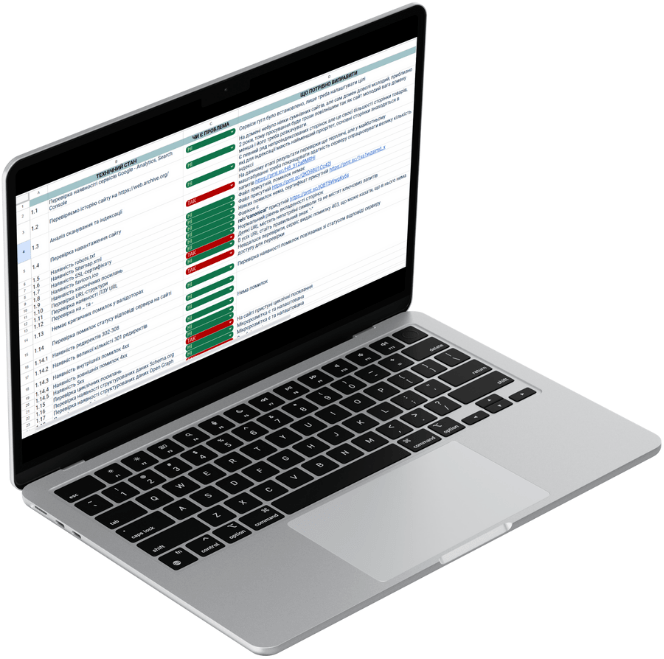
Result of the Technical Audit:
A number of critical technical issues were identified that required immediate intervention. Although specific details (regarding CMS, code errors, or server configuration) remain internal information, the general conclusion was: the existing technical shortcomings significantly hindered the effective scanning and indexing of most of the product range, which directly limited the potential for organic traffic.
2. Usability and User Experience (UX) Audit
A quality online store must be not only technically sound but also convenient for the buyer. Low conversion is often a result of poor usability.
The audit process included:
- Sales Funnel Analysis: Evaluation of the user path from the homepage to checkout, identifying drop-off points (e.g., cart, delivery page).
- Trust Element Check: Availability and prominence of testimonials, delivery/returns information, contact details, certificates.
- Product Card Convenience Assessment: Visibility of the “Buy” button, quality of photos, presence of detailed size chart descriptions (critically important for underwear).
- Checkout Process Verification: Analysis of the number of steps and the need for registration.
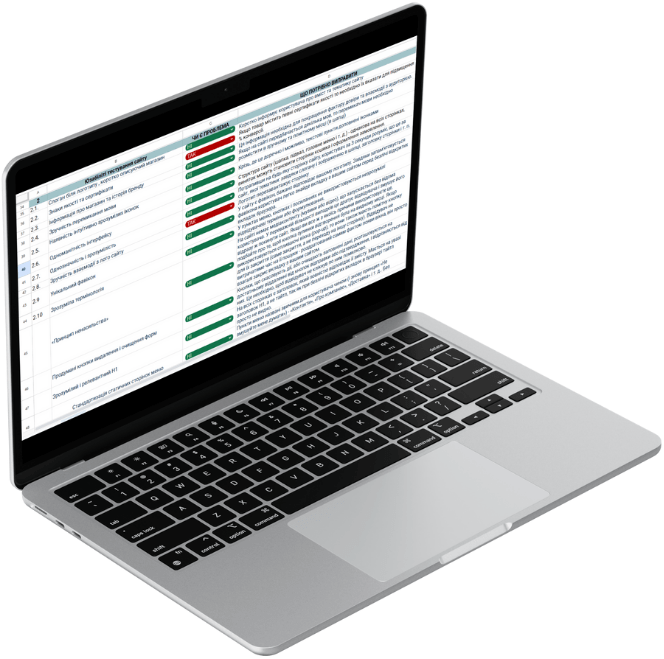
Result of the Usability Audit:
A number of “bottlenecks” were identified in the process of user interaction with the site, which negatively affected key behavioral metrics and, consequently, reduced the conversion rate. The identified problems required redesigning interface elements and optimizing the user journey.
3. Current Site Structure and Semantics Audit
An effective structure is the key to distributing internal authority (PageRank) and covering the widest possible semantic core.
The audit process included:
- Current Hierarchy Analysis: Evaluation of page depth, use of categories, subcategories, and filters.
- Semantic Core Collection and Clustering: Conducting an in-depth analysis of queries in the children’s underwear niche.
- Comparison: Juxtaposing the current structure with the needs of the semantic core. It was found that many potentially high-volume queries (e.g., by fabric type, pattern, age) did not have corresponding landing pages.

Implemented New Structure:
Based on a detailed analysis, a new, more flexible and deeper site structure was implemented. It involved creating new categories and utilizing SEO filters, which allowed for covering a significantly wider range of targeted search queries and better meeting user needs. This became an important step towards increasing organic traffic.
Stage 2: Forming Detailed Technical Specifications (TS)
The final and most important stage of the audits was the transformation of the identified problems into clear instructions for the DvomShop development team.
A set of detailed Technical Specifications (TS) was compiled, divided by priority (Critical, Important, Recommended), which included:
- TS for fixing technical errors: From setting up correct redirects and canonical links to optimizing loading speed.
- TS for implementing the new structure: Step-by-step instructions for creating new categories, internal linking, and setting up SEO filters.
- TS for improving usability: Recommendations for optimizing the product card, simplifying the cart, and the checkout process.
 The result obtained