МИ ПРАЦЮЄМО ДЛЯ УКРАЇНИ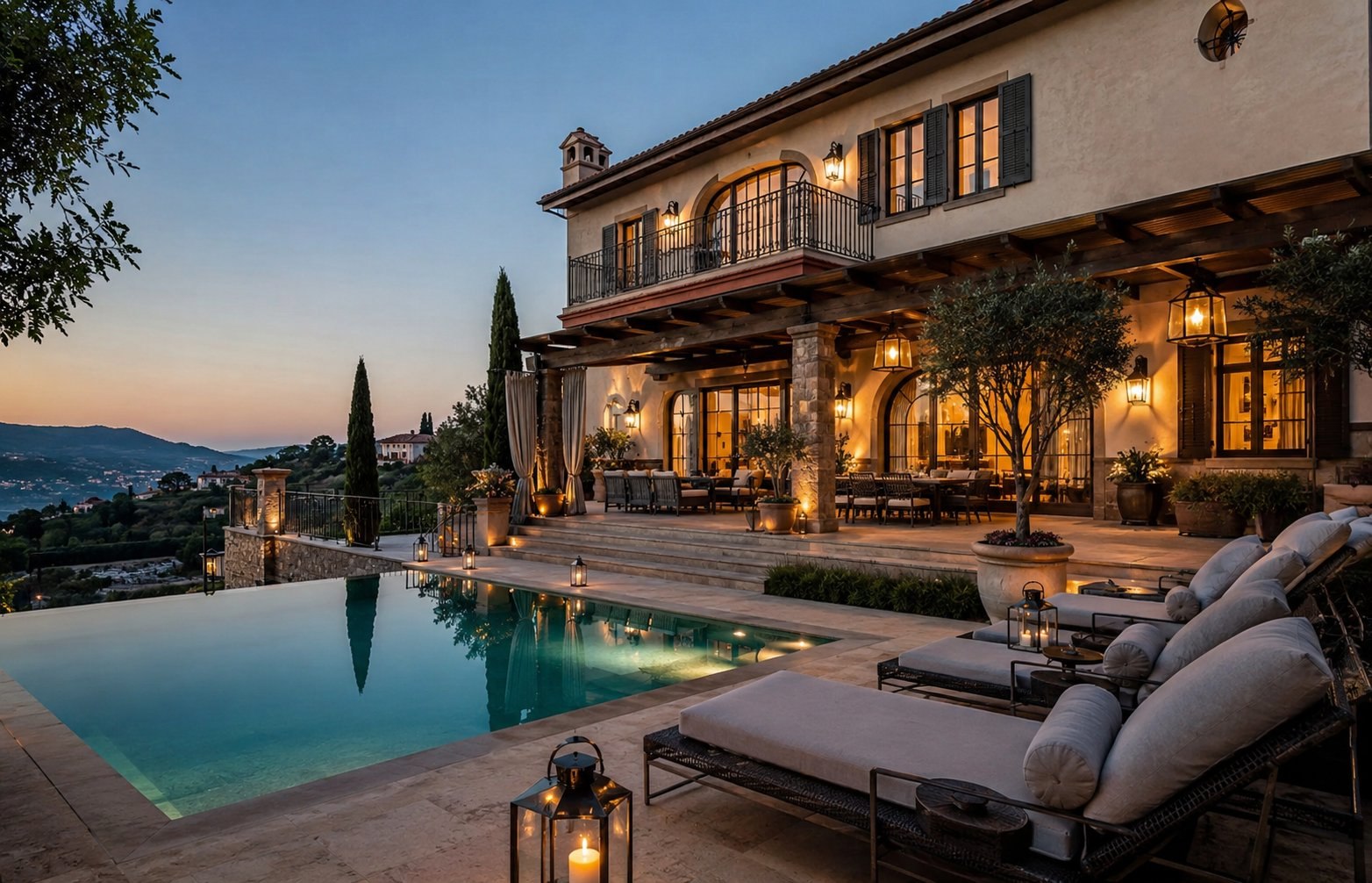
 Input data
 Progress of work
The landing page development for this segment started not with design, but with target audience research — ensuring that every block of the page hits a specific goal rather than just looking good. We thoroughly analyzed who exactly would visit this page. The primary audience consists of high-net-worth clients from Germany, Austria, and Switzerland ready to invest from €1 million in restoration. At the same time, the landing page targets potential clients in Italy, particularly Tuscany. Some already own historic real estate in Tuscany, while others are still searching, but they all share one thing in common: they dream of owning a home in central Italy, yet fear the process itself. We listed these fears separately to address each one directly:
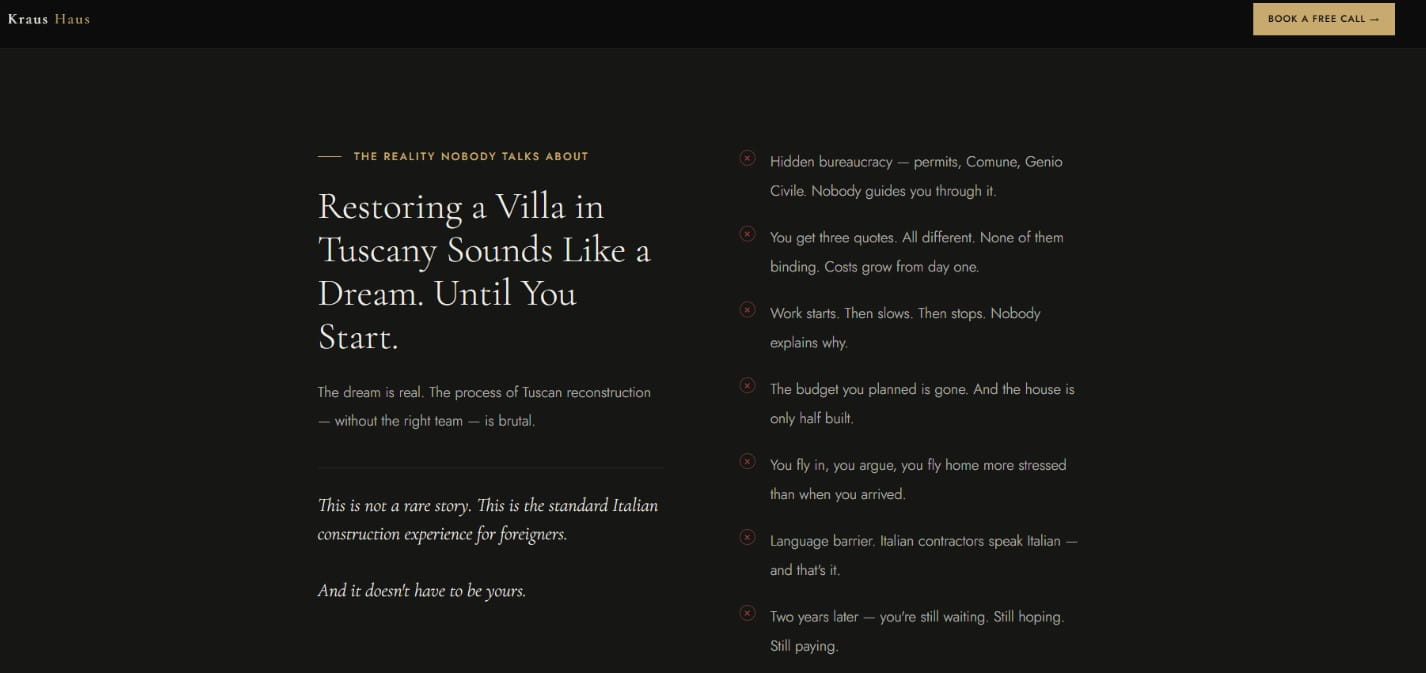
- Italian bureaucracy without an insider knowledgeable in local approvals and permits;
- exceeding the agreed budget during construction;
- work halting for months without explanation;
- language barriers with Italian contractors;
- inability to oversee the process from abroad.
Page Concept
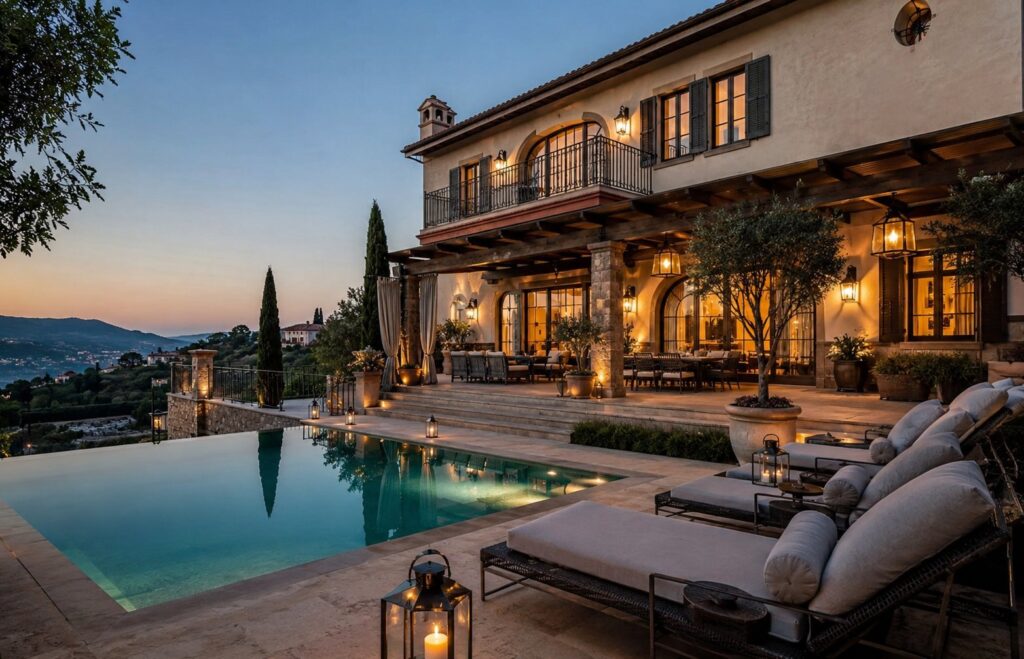
The concept is built around the client, not just the service: first comes the dream that leads them to consider restoration in Tuscany in the first place, followed by a system that makes this dream realistic rather than risky. The landing page opens not with a service description, but with an emotion — warm stone, cypress trees, a glass of wine on the terrace of their own villa. Only after evoking this vision does the page transition to the solution: a transparent budget before work begins, weekly video updates instead of in-person site visits, a dedicated project manager, long-lasting engineering quality (underfloor heating, waterproofing, climate control systems), and a single team accountable for the final outcome rather than shifting blame among contractors.
Page Structure
We assembled the page from blocks, each solving a distinct goal — from making a strong first impression to driving a specific action. Here is how it looks on the website.
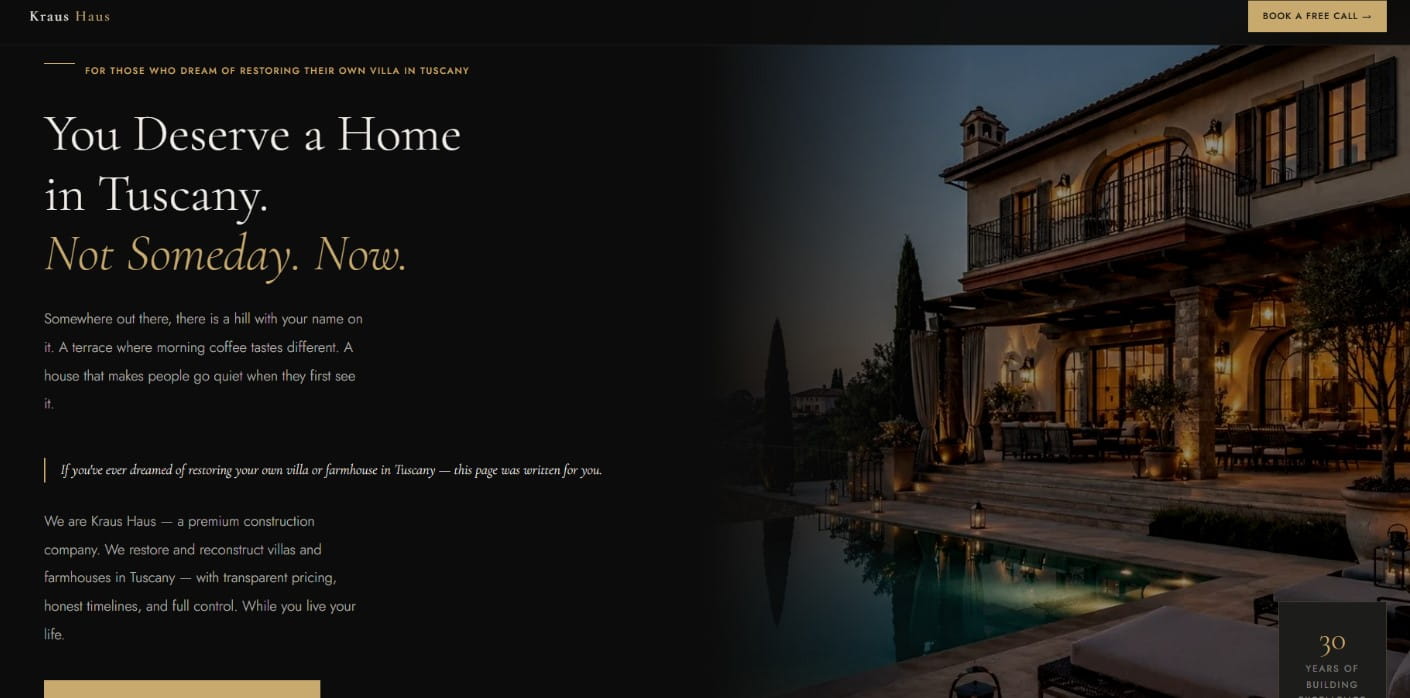
- First Screen. Captures attention with the dream, core value proposition, and call-to-action button — the very first elements visitors see.
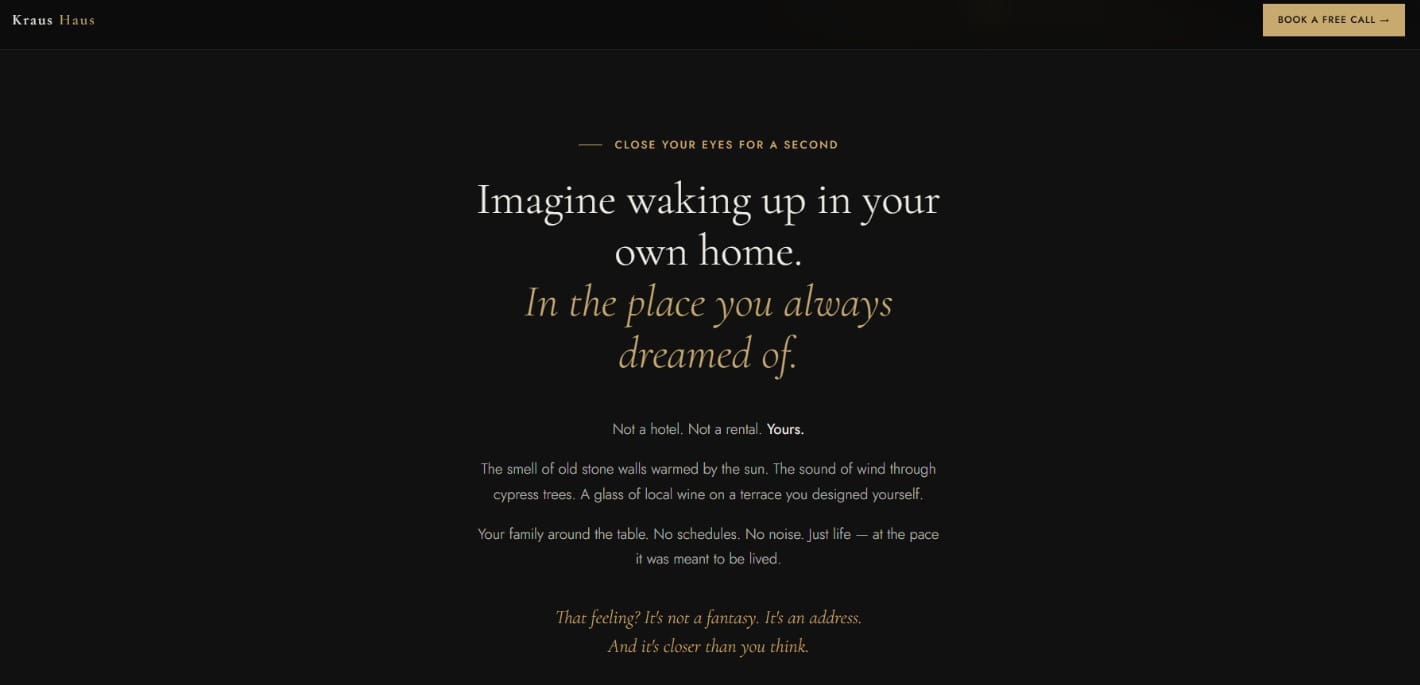
- Emotional Immersion. Immerses the visitor in the Tuscan atmosphere before discussing services.
- Pain Points Block. Highlights the client’s own concerns regarding restoration, demonstrating that we truly understand them.
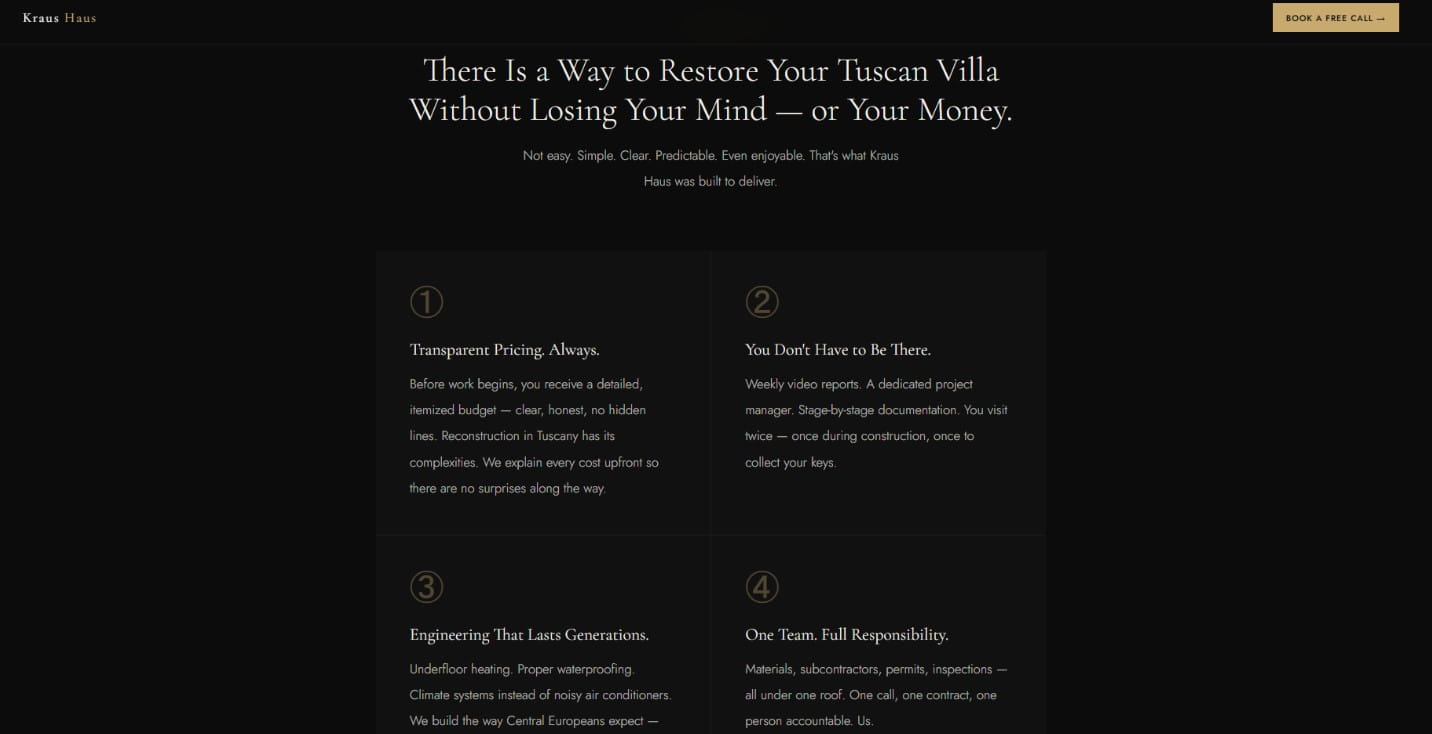
- Key Advantages. Four key benefits of working with Kraus Haus presented concisely and clearly.
- Founder Block. Features Andrey Kravz as an engineer personally accountable for technical project quality.
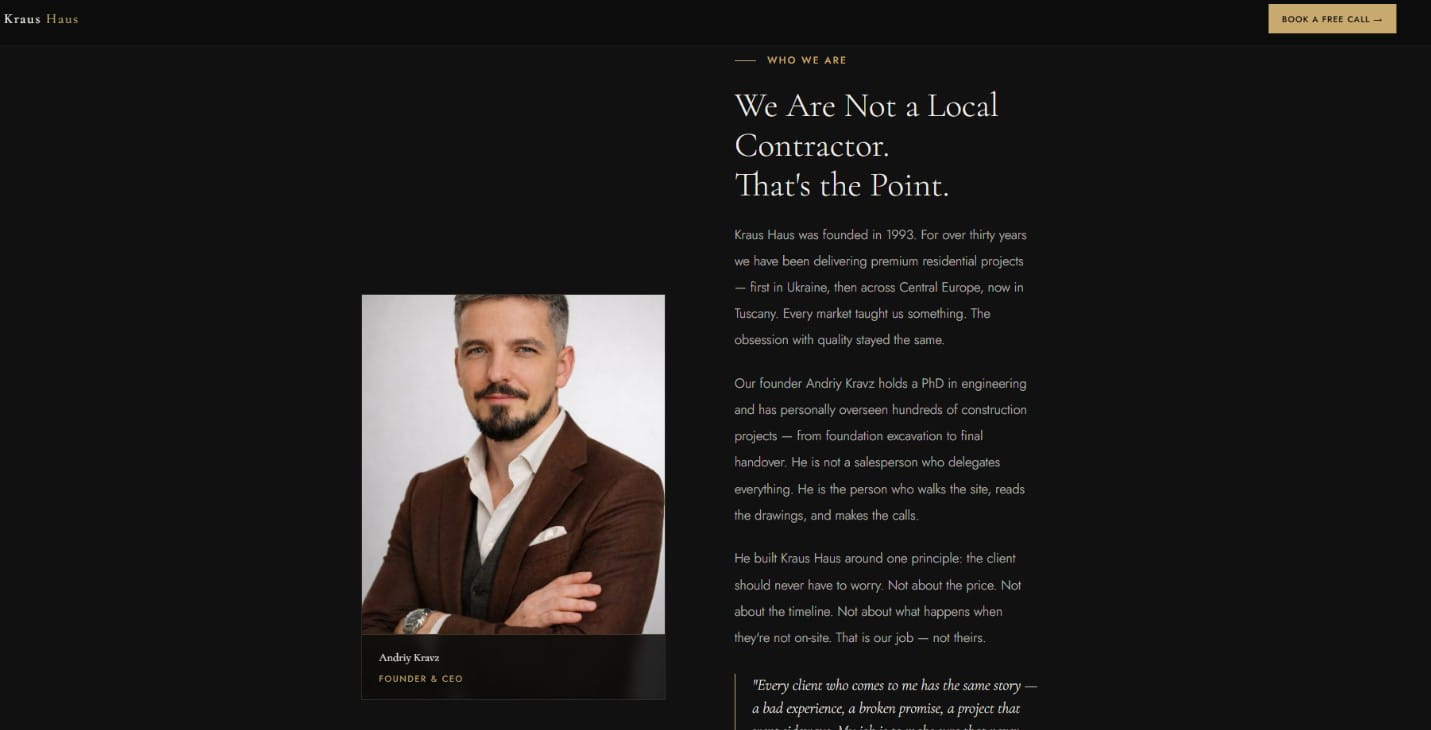
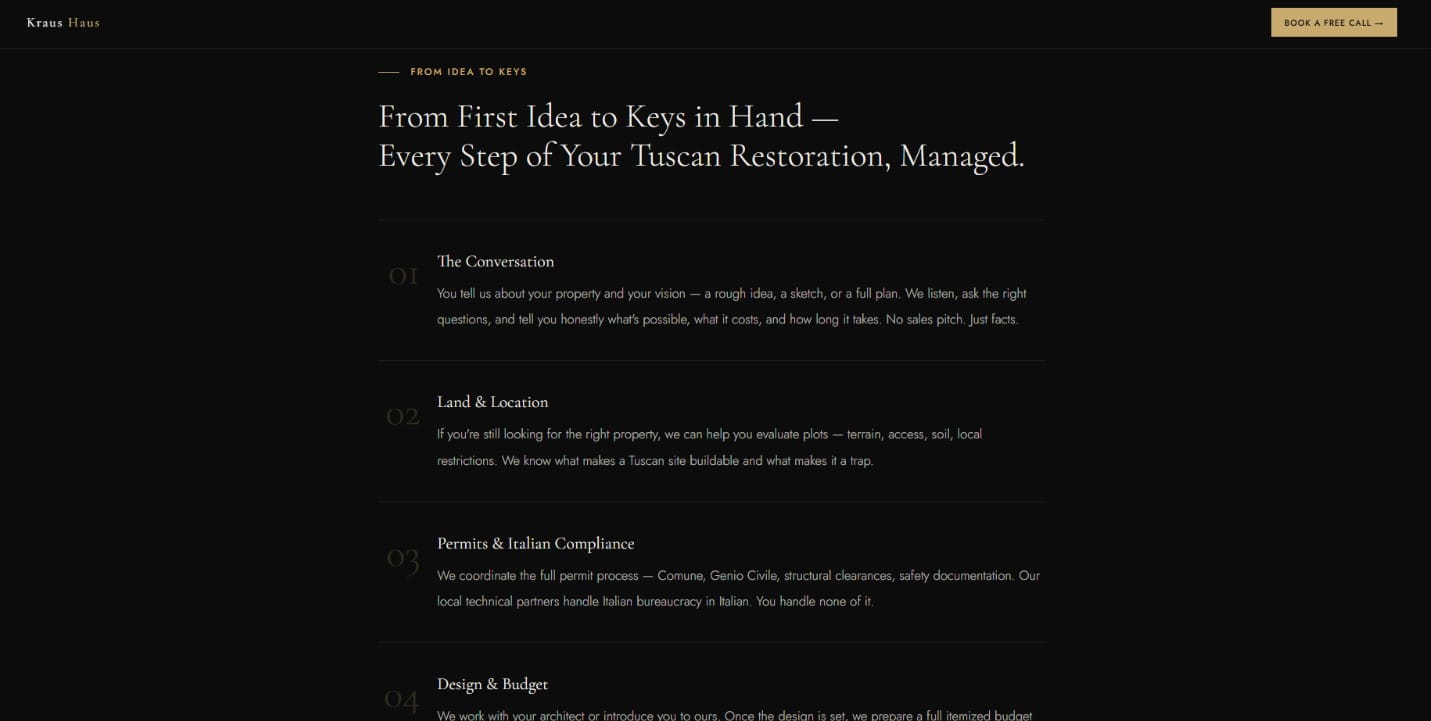
- Step-by-Step Process. Seven steps from initial consultation to key handover, giving the client full clarity on the journey ahead.
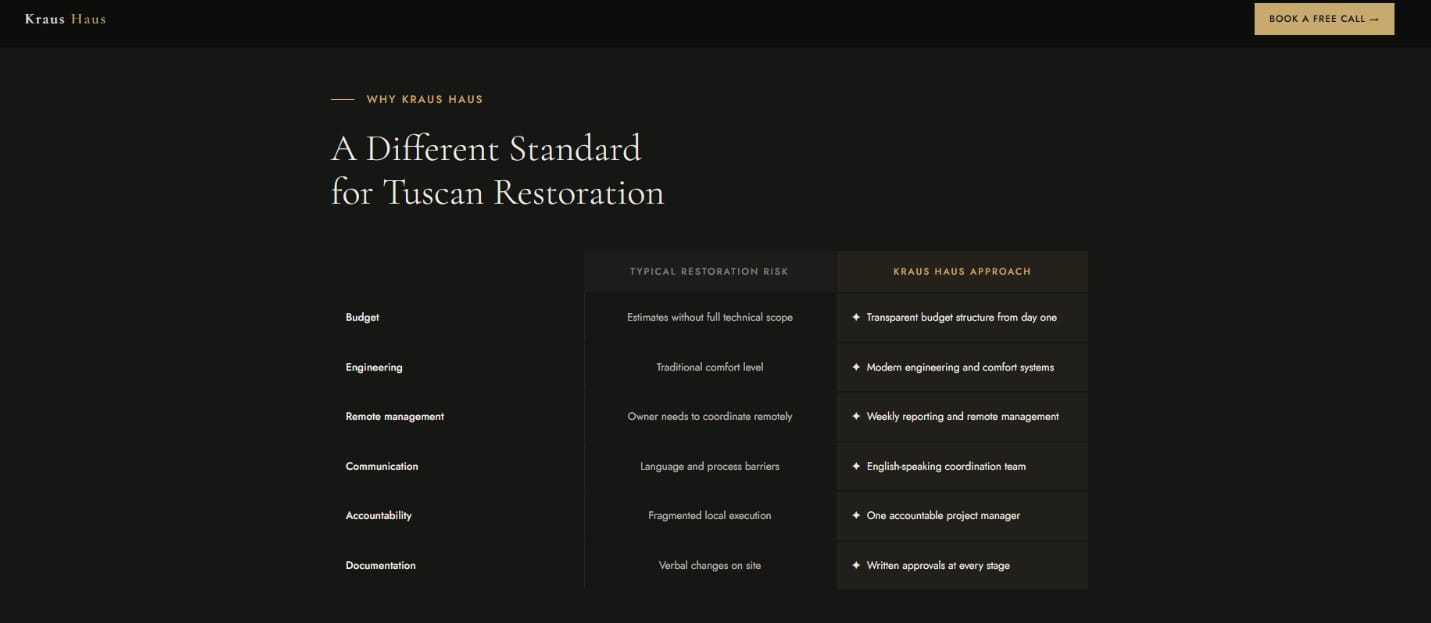
- Comparison Table. Demonstrates the contrast between Kraus Haus’s approach and typical market standards.
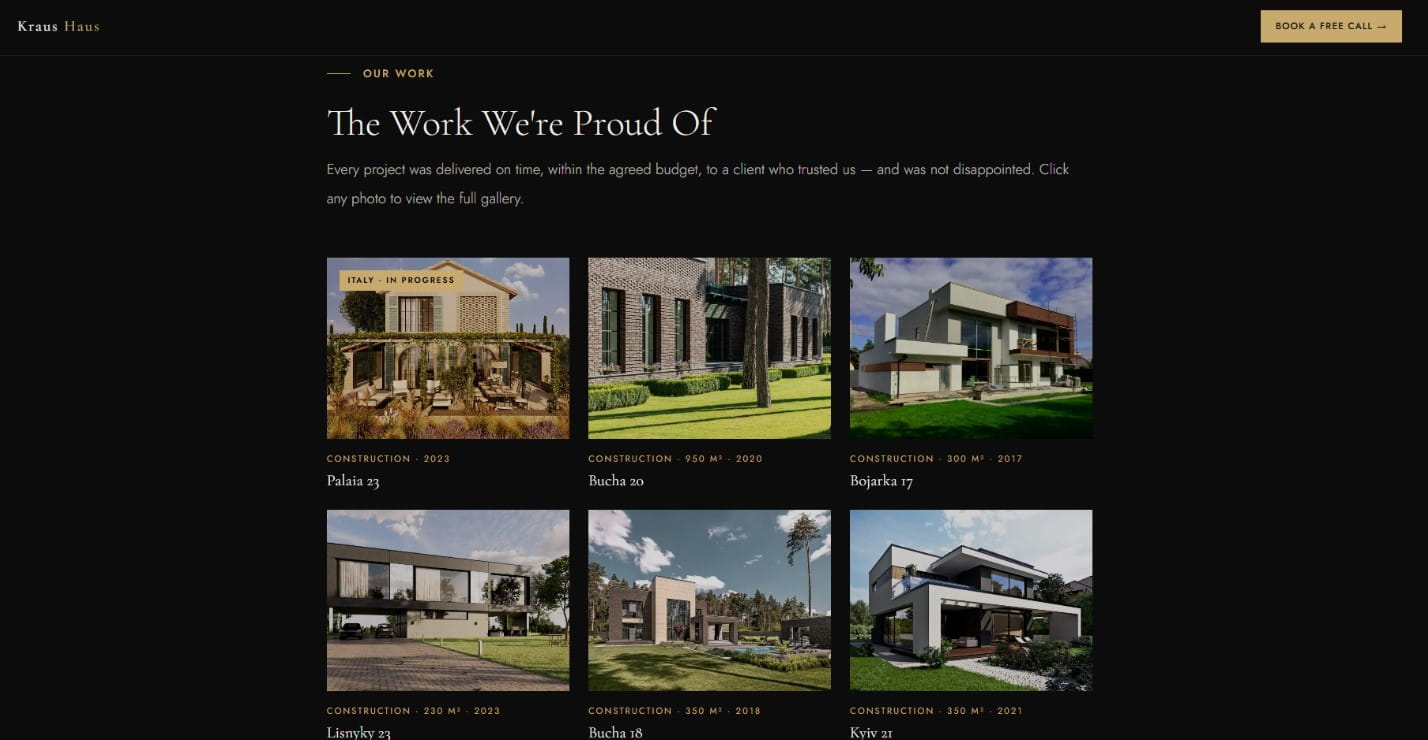
- Portfolio. Real completed projects proving that the promises above are backed by results.
- Local Technical Network. Vetted local subcontractors in Tuscany, proving real on-the-ground presence.
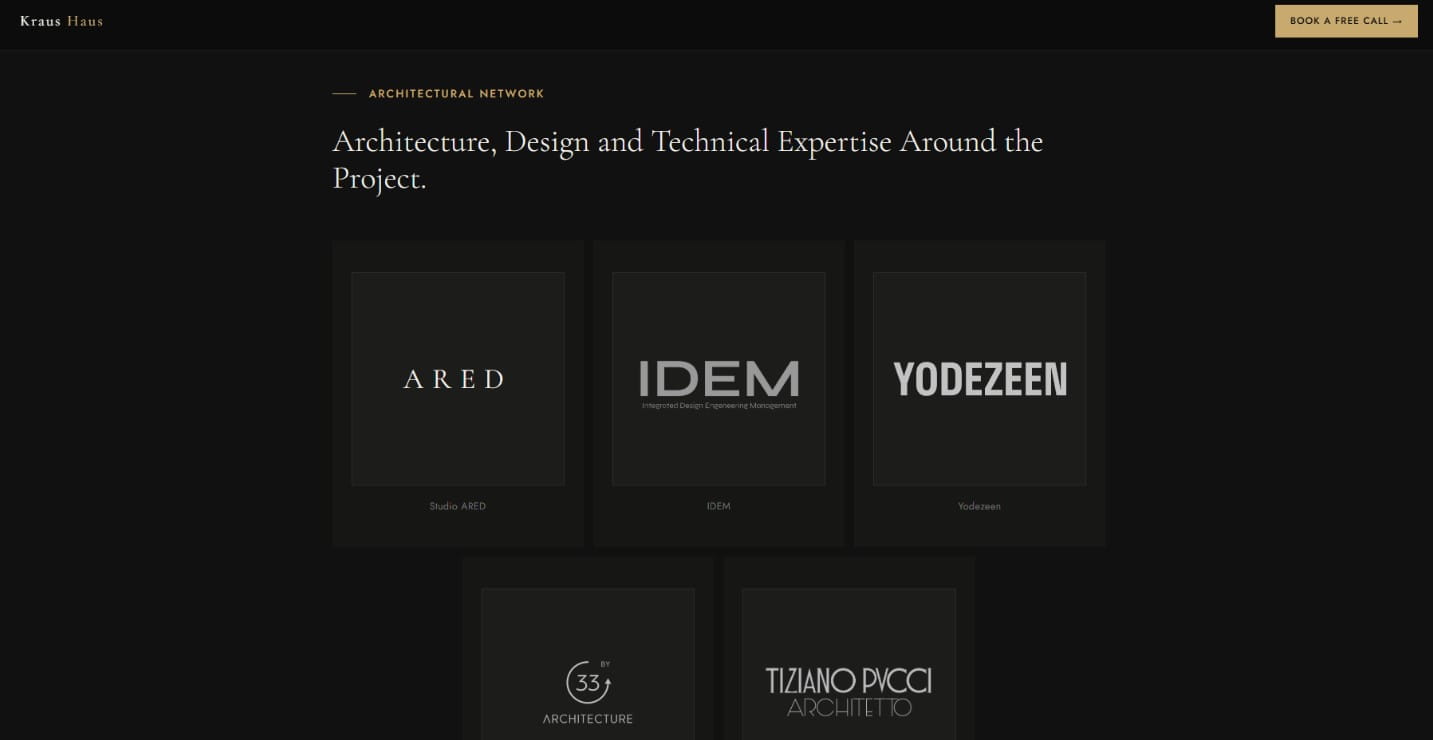
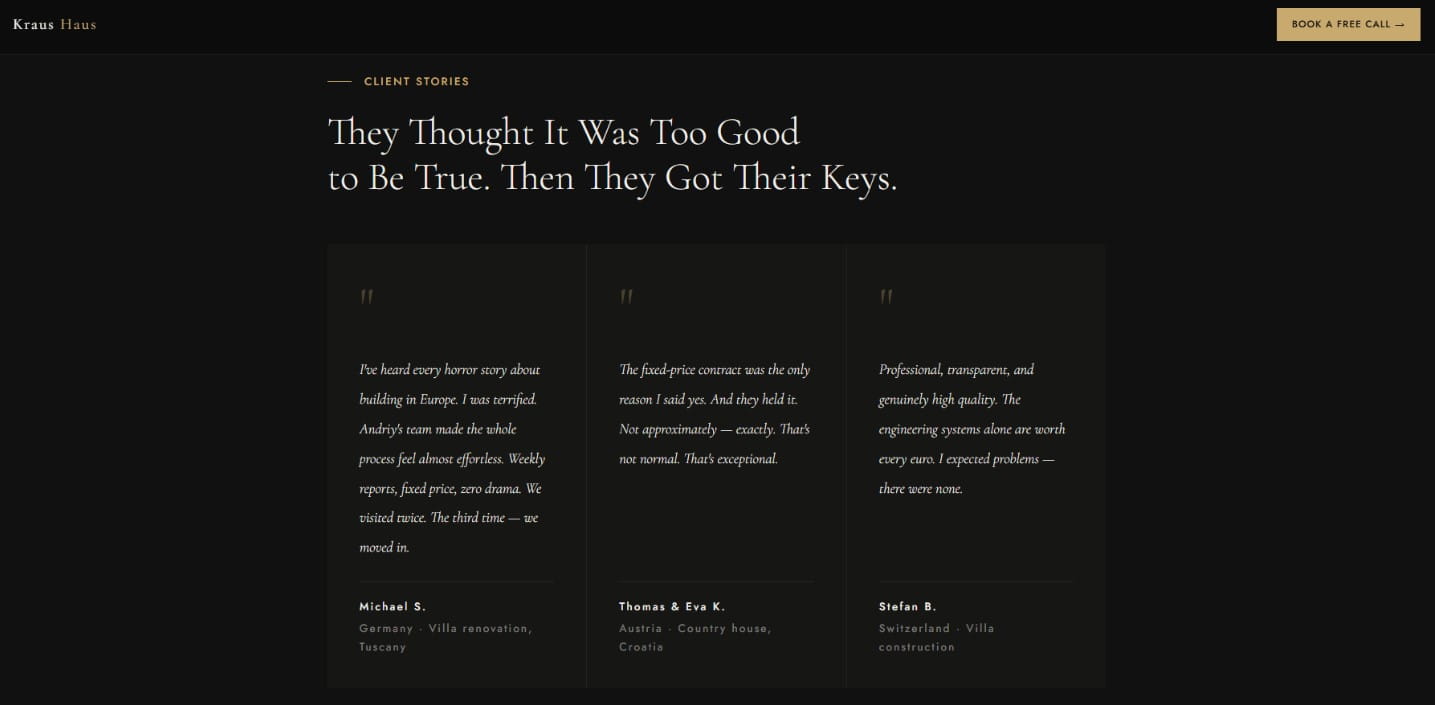
- Testimonials. Social proof from clients who have already completed their restoration journey with the company.
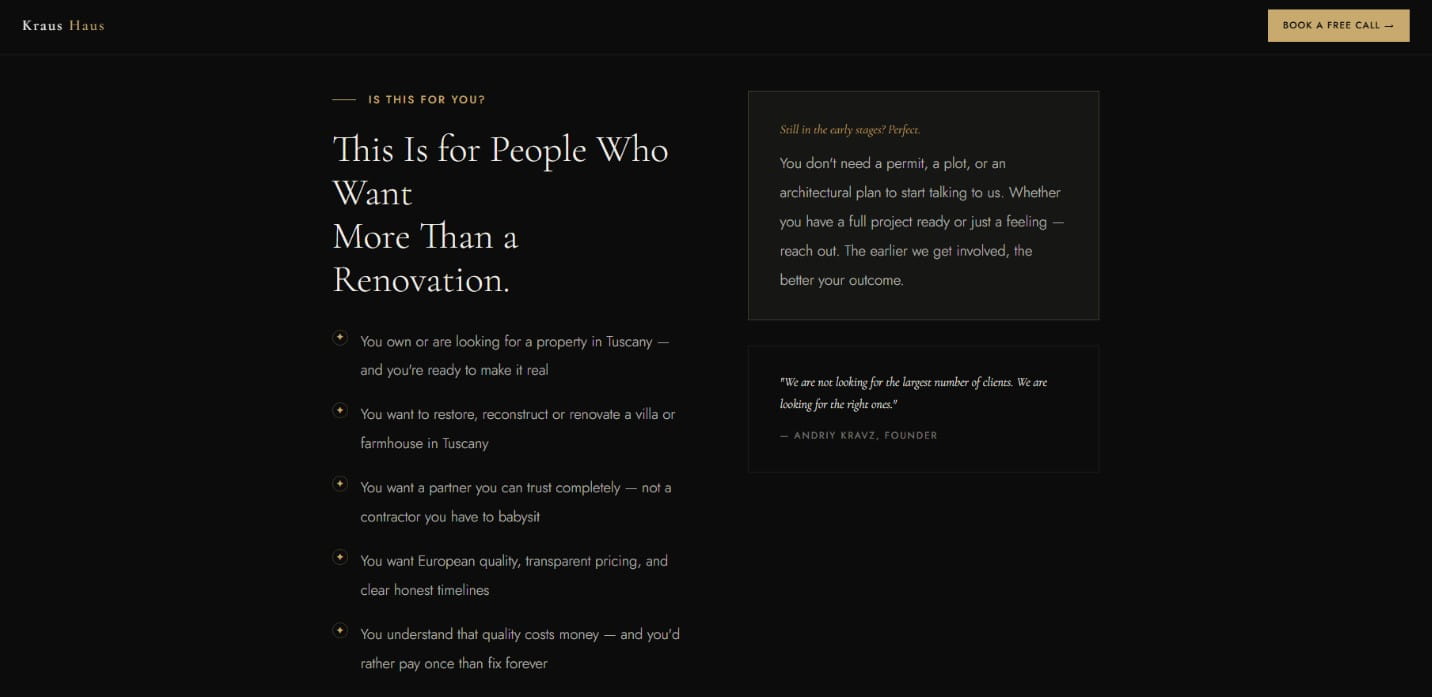
- Self-Assessment “Is This for You?”. A block helping visitors evaluate if this service fits their needs.
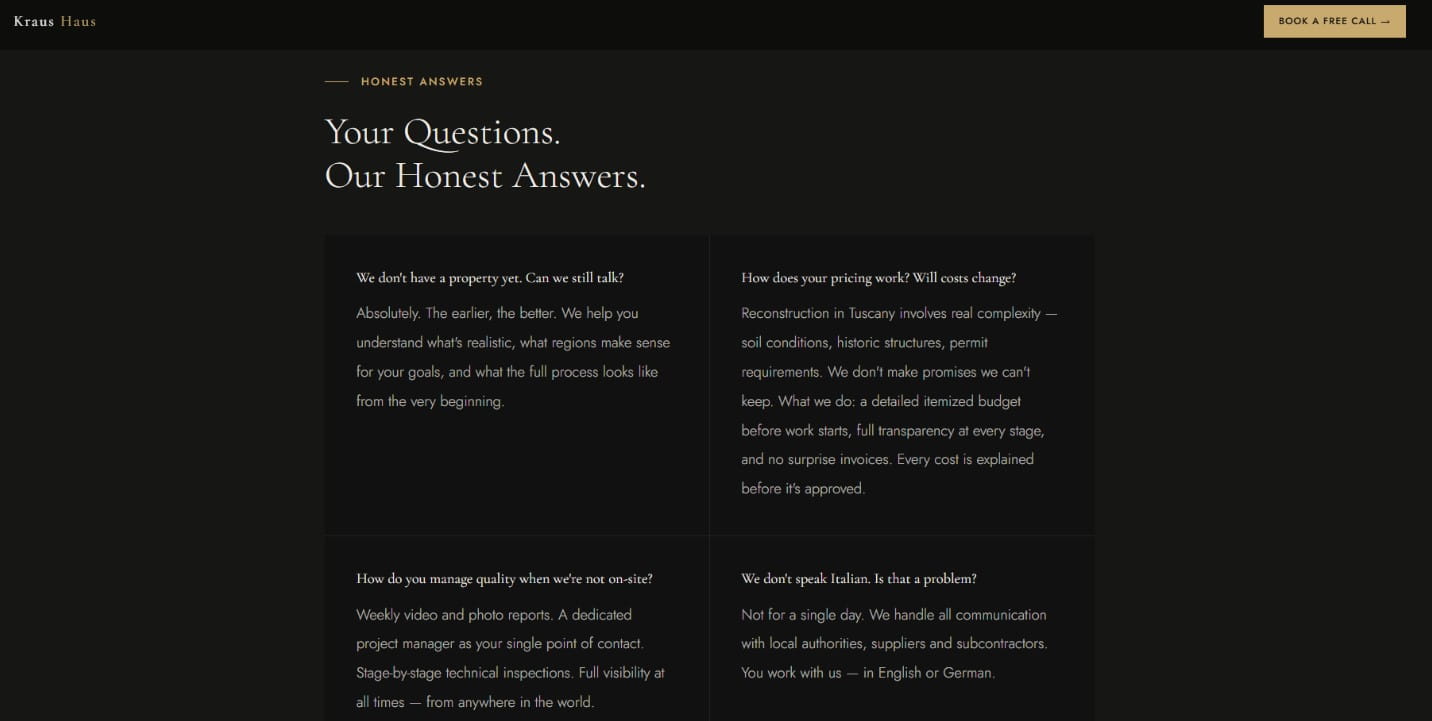
- FAQ. Straightforward answers to common questions without evasive language.
- Final Call to Action. The closing screen prompting visitors to submit an inquiry.
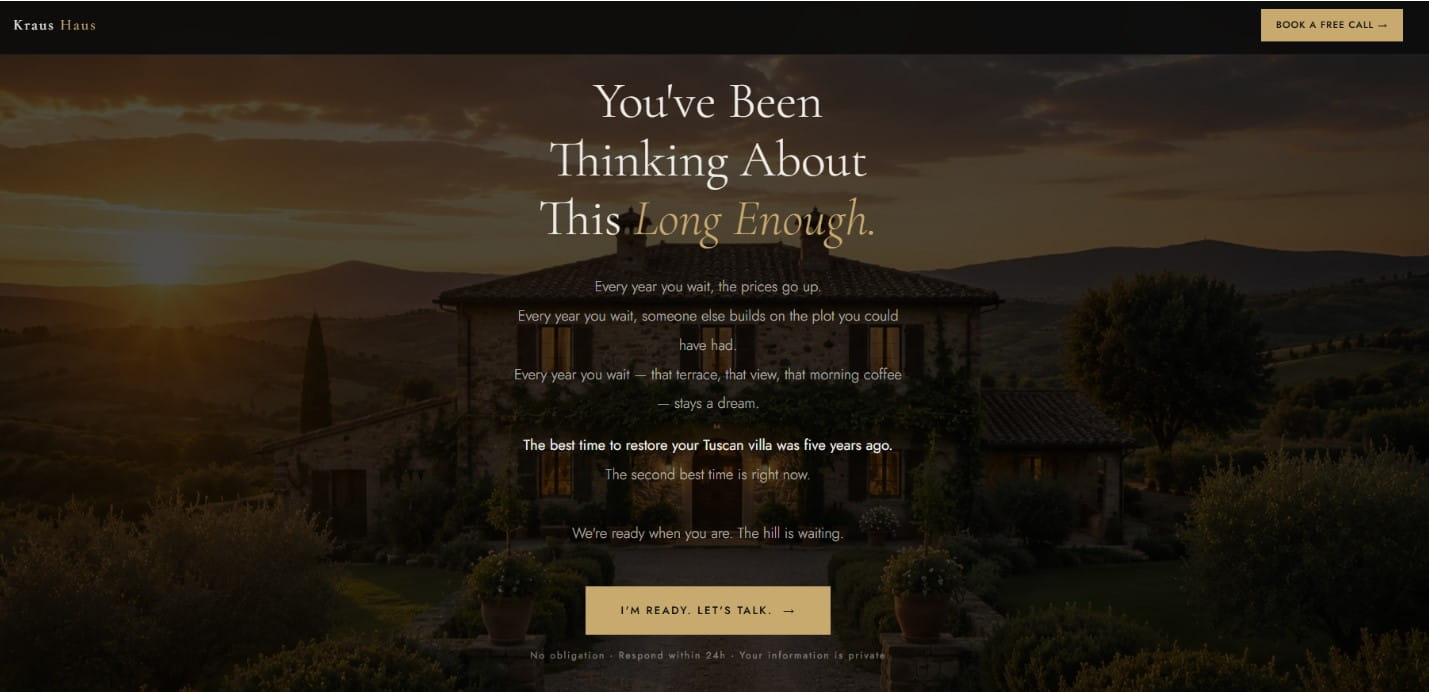
This sequence is intentional: for someone hesitant due to high costs and potential risks, it is crucial to first envision the dream behind the project, then feel confident that their concerns are recognized, and finally receive concrete proof that implementation is feasible.
Design
We intentionally avoided a typical “construction site” aesthetic — no hard hats or scaffolding. Instead, we opted for a refined, premium style featuring expansive photography of Tuscan landscapes, stone textures, cypresses, and generous white space. The high-end feel is created through typography, large-scale imagery, open layouts, and balanced composition — elegant title fonts combined with clean body typography to ensure the page feels sophisticated yet easy to read. The comparison table was designed to render seamlessly across desktop and mobile devices.
Copywriting
The copy was written in English with clear headings and targeted messaging addressing real client concerns. Throughout the page, we specifically refer to “restoration” rather than “new construction” — even when work starts from the foundation — because clients care about preserving the soul of a historic property rather than building a modern house. Key details highlighted include realistic timelines (10–14 months for full restoration, 14–20 months for new builds), communication in English or German, and full management of Italian bureaucracy by the team. Engineering specifics were given a dedicated section, as technical precision builds far greater trust than generic marketing language.
Technical Implementation
The technical execution of landing page development is just as crucial as design and copywriting, as it determines whether the website is ready for paid advertising traffic. The completed website, italy.kraus-haus.com, was engineered from day one to handle ad traffic smoothly and accurately track lead sources:
- built completely from scratch with a custom design tailored to the project;
- fully responsive across desktop and mobile devices;
- contact form collects name, email, and preferred messenger (WhatsApp or Telegram), promising a response within 24 hours;
- integrated analytics system tracking visitor behavior;
- custom tracking pixel configured for Facebook and Instagram ads to measure precise conversion rates.
This technical foundation served as the cornerstone for our ad campaign, which we detailed in a separate case study — Kraus Haus: Targeted Advertising for Villa Restoration in Tuscany.
 Obtained result